THE LATEST...
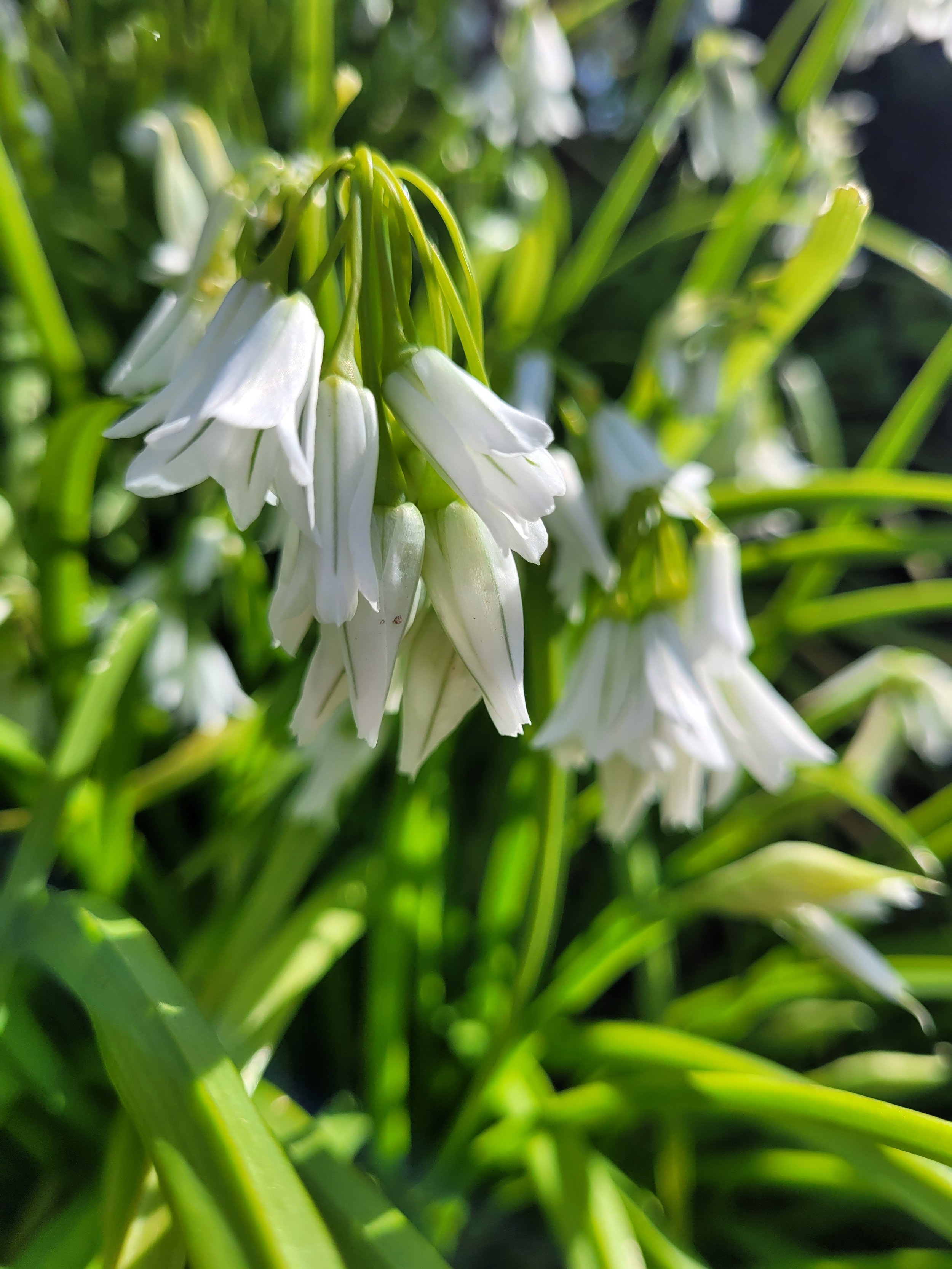
Wild-Garlic’s Wild News Cycle
Wild garlic doesn't just have a regular growth pattern but a regular news cycle too.
As Wild Garlic (Allium ursinum) emerges in British woodlands, the media coverage follows a predictable trajectory. Each spring, news reports frame the plant through four specific lenses: toxicity risks, legal restrictions, "nuisance" disputes, and historical folklore.
Toxicity and Identification Risks
Media coverage begins in March, coinciding with the plant's emergence. Reports focus on the risk of accidental poisoning due to misidentification.
Wild Garlic grows in similar habitats to Lily of the Valley (Convallaria majalis) and Autumn Crocus (Colchicum autumnale), both of which are toxic. Foraging guides, such as those published by the National Trust, warn of the "Sniff Test Paradox": once a forager’s hands smell of garlic, they may fail to detect the absence of scent on a toxic lookalike.
"The key difference between the two plants is that wild garlic always smells... If you're in any doubt about which plant you've found, do not pick or eat it." — National Trust, "Places to forage for wild garlic"
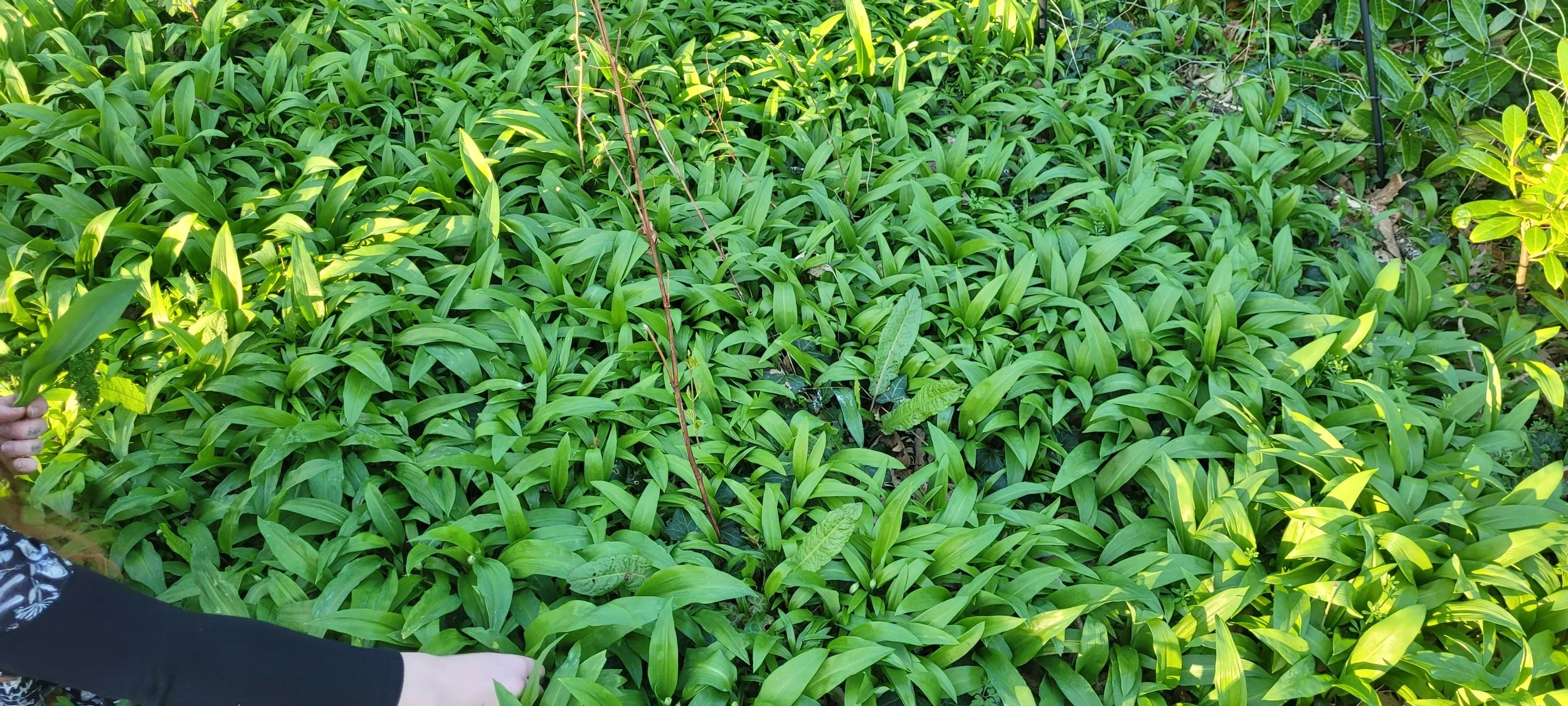
Botanical distinction relies on morphology rather than scent. Convallaria majalis leaves unfurl from a single tight stem, whereas Allium ursinum leaves emerge individually from the soil base.
Commercial Harvesting and the Law
In April, news reports frequently cover "commercial foraging," citing police interventions. A notable case occurred in March 2022 in Lostwithiel, Cornwall, where The Guardian and Cornish Times reported residents setting up patrols to stop "white van" gangs from stripping Millham Lane bare.
Two primary laws govern the harvest:
The Theft Act 1968: Makes it illegal to pick wild foliage for commercial gain (reward or sale) without landowner permission.
The Wildlife and Countryside Act 1981: Makes it illegal for any person (commercial or personal) to uproot a wild plant without permission.
"It is legal to cut down and take wild flowers for personal use — but not for commercial purposes and sale." — The Cornish Times, March 24, 2022
Conservation reports note that large-scale harvesting often results in soil compaction and damage to co-habitating species, specifically the native Bluebell (Hyacinthoides non-scripta).
Ancient Woodland Indicator Status vs. Nuisance Complaints
In May, during the flowering phase, coverage often shifts to the plant's sensory impact. While not typically a statutory nuisance like industrial noise, the strong sulfurous odor frequently generates local debate in residential areas bordering woodlands.
Biologically, Allium ursinum is classified as an Ancient Woodland Indicator (AWI). Its presence typically signifies that an area has been continuously wooded since at least 1600 AD. The strong scent is a natural characteristic of the plant's peak growth phase.
Historical Usage
Media coverage frequently references historical texts to contextualize the plant's consumption. A common citation found in British folklore collections (and quoted by foragers like EatWeeds) is the 17th-century proverb:
"Eat leeks in Lide [March] and ramsins in May, and all the year after physicians may play."
Historically, the plant was used as a vermifuge (to expel intestinal worms) and as a spring tonic due to its vitamin content following winter.
Conclusion: The Cycle Repeats
By June, the foliage of Allium ursinum withers and the plant enters dormancy. As the visible signs of the plant disappear, the media coverage ceases. The bulbs remain underground until the following spring, when the biological cycle—and the accompanying news cycle—begins again.
"Don't Eat Daffodils"; The Same Headline Every Spring
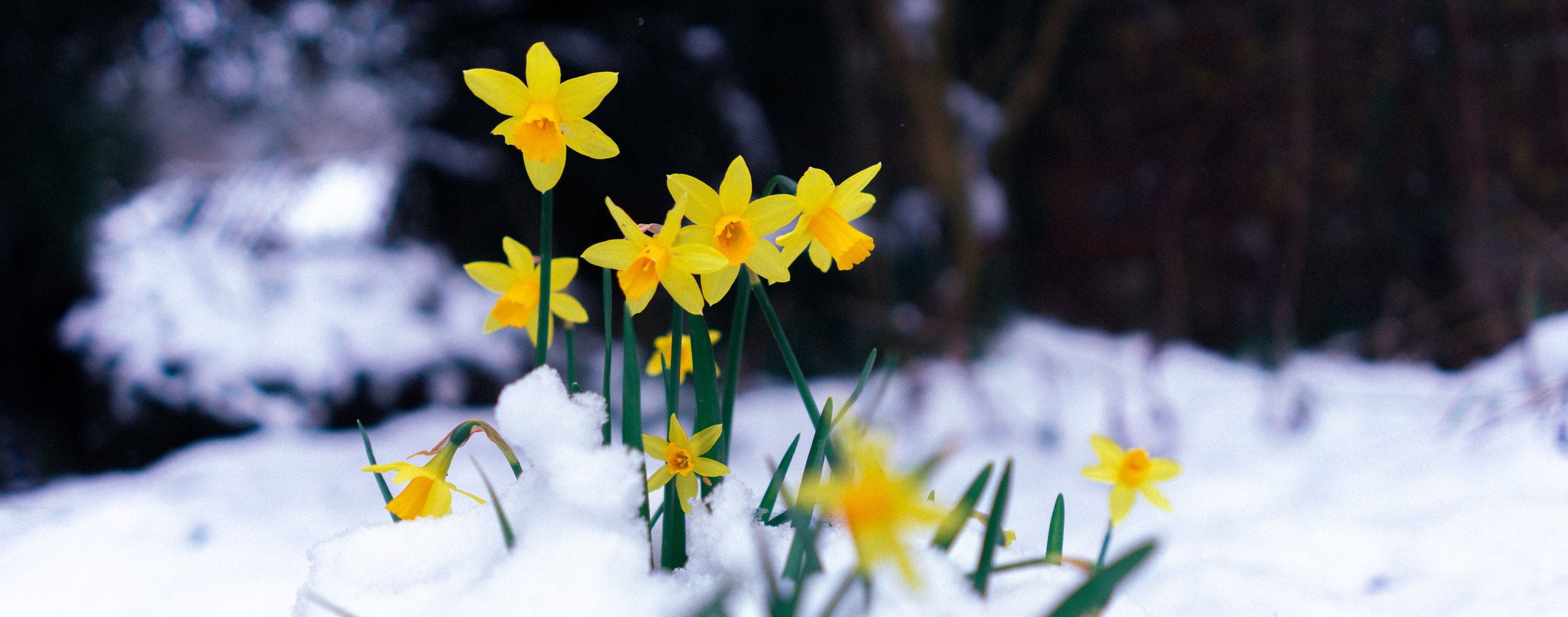
Daffodils bloom the pages of news sources every year for their striking appearance, economic value, cultural symbolism, and for their potential to poison pets.
Daffodil bulbs are highly poisonous to animals but those same toxins taste repulsive, even to dogs. Deer and rodents won't touch them. Symptoms also start with immediate vomiting, which flushes the stomach before complete digestion. Most animals just vomit and learn not to eat it.
However, their toxic taste has been masked when mistakenly added to an onion soup and served to a school of unaware children.
"School Children in Poison Scare"
According to the RHS, people 'regularly' mistake them for onions, which sounded absurd until I found *this article* about a dozen children falling ill from daffodil soup at a school:
"The soup had been made in class using onions dug from their vegetable garden, but a daffodil bulb was also unearthed accidentally by one of the children and put in the dish. Around a dozen Year Five pupils began vomiting in bowls and toilets, while others suffered stomach cramps."

"Drugs from Daffodils"
This edition of Chemistry and Industry reveals that ancient Greek cultures used narcissi as a topical numbing agent and as a way to induce vomiting:
"Daffodils have been used regularly in folk and traditional medicine, for in addition to the well-documented sickness-inducing properties, extracts can produce numbness, hallucinations, convulsions and cardiac effects. Applying juice or aqueous extracts to burns or open wounds can result in numbness."
The 1931 book A Modern Herbal expands upon this usage:
"It has been used as an application to wounds. For hard imposthumes, for burns, for strained sinews, stiff or painful joints, and other local ailments, and for 'drawing forth thorns or stubs from any part of the body' it was highly esteemed.”
“The Daffodil was the basis of an ancient ointment called Narcissimum.”
“The powdered flowers have been used as an emetic in place of the bulbs, and in the form of infusion or syrup, in pulmonary catarrh."
So those schoolchildren accidentally ingested an ancient emetic - which worked exactly as a doctor would expect.
Lucky for them, the dosage was low.
Pictured in this blog are the 'Jetfire' variety of narcissi growing in my garden, a type which have won an award from the Royal Horticultural Society.

"The Cult of the Daffodil"
According to this Spectator article,
"Spring is the season of supermarket daffodils."
But those who pick the flowers for a global market sometimes suffer for their work.
"A skilled picker can expect to earn upwards of £30 an hour. Many of the fastest harvesters avoid using gloves, which makes them susceptible to a condition colloquially known as ‘daff rash’."
"Distribution of Daffodil Pickers' Rash"
"Daff' rash" is explained by this published study, which concludes daffodil rash is from repeated or prolonged contact with the sap inside the daffodil's stem.
"The method of picking and then gathering the flowers explains the development of the rash at the points of contact of plant sap with skin. Crystals of calcium oxalate in the sap, in conjunction with alkaloids, act as an irritant, and also cause the characteristic sores."
"Do Daffodils Kill Other Flowers?"
Further to this toxicity, Chemistry educator Andy Brunning revealed on his website that daffodils need their own vase, else they'll suffocate other flowers.
"Placed in a vase with other flowers, they can cause premature wilting and death. Compounds in the mucilage are to blame for the effect daffodils have on other flowers."
Sap from the stem - the same sap giving people daff' rash - is released into the vase water. These alkaloids either poison other flowers outright or else create a sugary environment for bacteria to blossom, blocking stems from drinking water.
There are exceptions however:
"Interestingly, some flowers have more tolerance for the daffodil’s alkaloid poisons than others. The vase life of irises, for example, can actually be enhanced by the addition of a daffodil. This is because a particular alkaloid, narciclasine, slows down the creation of proteins which control ageing and degradation of plants."

"Welcome to The Daffodil Society"
The toxicity doesn't put off the devoted collectors of daffodils, such as the Daffodil Society established in 1898, and now a registered charity for all to support.
"Established in Birmingham as The Midland Daffodil Society in 1898, The Daffodil Society is the specialist society of Great Britain for all who are interested in the Genus Narcissus, by way of exhibiting, breeding or just lovers of the true heralds of spring."
"Daffodils are one of the most popular of all garden plants and appear in over 80% of British gardens."
In conclusion,
Don't eat daffodils.
What are your own experiences with daffodils? Let me know in the comments below

Is Buddleia Bad Despite RHS Awards?

Buddleia, or buddleja, isn’t dangerous in the usual ways.
It has been designated a ‘noxious weed’ by the Royal Horticulture Society despite the RHS also awarding the plant a Garden Merit Award many times since the late 1800’s.
Butterfly charities such as the BCB recommend planting butterfly bushes only in “proper areas” so that the invasive plant does not outperform local plants. Such as has happened to the ‘special area of scientific interest’ Folkestone Warren chalk grasslands in Kent.
Dead-heading, a process of removing dead flowers before they become seedheads, is the softest approach recommended by the RHS.
Harder approaches, taken by rail companies to remove the infrastructure-damaging plant, include digging up roots and spraying weedkillers on the site. A somewhat understandable yet sad outcome.
The out-of-control success of buddleia in the UK relies on its ability to produce many seeds during times other plants would either not spread as quickly or where other plants would be less aggressive to infrastructure.

Buddleia branches are long, flexible spears which:
Root if they touch soil,
Spread large quantities of seeds wherever they reach,
Harden into woody stems thickening enough to crack concrete
and
Constantly grow shoots from every part even in shady areas.
It’s easy to be worried. Many experts would say: rightly worried. But if grown in a controlled environment (the antithesis to a natural ecosystem) then buddleia is brilliant for butterflies,
or is it?
I thought so, from the obvious evidence that monarch butterflies love it. I have pictures to prove it. But it’s the not-so-obvious evidence that matters in the long term.
There are plenty of rarer butterfly species that are gradually losing their habitats to the fast-spreading buddleia, which itself needs no special habitat.
RHS Recommended Alternatives to Buddleia
The Royal Horticultural Society recommends a number of alternatives to buddleia.
Heathers
Lavenders
Thyme
Dogwood
Viburnums
Hebes
These, rather than hinder other plants, grow quite well as part of a diverse garden. One filled with a rainbow of fluttering (and not just the monarchs)
How to Manage Buddleigh
Perhaps you want a buddleja, despite the risk, or simply can’t bring yourself to remove such a charming plant.
Remove flowers once brown before they become seed heads
Cut back the buddleigh once it finishes flowering
Buddleia loves being cut back.
It’s extremely difficult to kill and will simply grow new shoots from even a small stump.
WHAT ARE YOUR EXPERIENCES WITH INVASIVE PLANTS LIKE BUDLEJA?
COMMENT BELOW
Do Robins Reuse Old Nests?

European robin, AKA “Robin Redbreast” in Great Britain
British (European) Robins nests are protected by laws that provide people with factual guidelines for helping birds.
Whether it’s a nest built by a robin or a nest-box made by a human, how can you tell if a robin will reuse the nesting spot?
It depends on:
Whether the nest is made by a bird or by human
The area around it: food, shelter, other animals plants, materials, etc
The other nests the robin has built…

Robin Nest Facts
Robins prefer nesting closer to the ground than other tree-dwelling birds
Robins like tight spaces in quiet places: hedges, holes in tree trunks, log piles
Females construct, males forage and help collect materials
Robin eggs are a beautiful blue colour
Each nest will contain a maximum ‘clutch’ of 5 or 6 eggs
Each clutch weighs about the same as the robin who laid it
A robin will consider it a good year if 3 or 4 clutches are laid
4 days to complete a cup-shaped nest around 4 inches across; made from branches, moss, hair, fur, feathers, and other insulative materials

Nesting Habits of European Robins During…
January begins with robins choosing partners while scouting out locations to build nests when it’s warmer
February can be warm enough for early nesting (and sometimes warm enough in January) but food is still scarce, so most robins will still be scouting nest locations and marking out territories
March is when nest building usually begins, taking roughly 4 days to complete a cup-shaped nest around 4 inches across; made from branches, moss, hair, fur, feathers, and other insulative materials.
April will see one egg every morning per robin (if fed sufficiently) and each nest will contain a maximum ‘clutch’ of 5 or 6 eggs. A robin will consider it a good year if 3 or 4 broods are laid, with each clutch weighing roughly the same as the robin itself.
May, June, July are egg-laying months; full of all the perils of life: weather, predators, and humans
Robins in August are moulting: shedding and replacing feathers during these warm times ahead of winter
Robins in September are feasting (if not still moulting), dressed in fresh plumage, fattening up before cold kills crops and frost hardens the ground
Robins in October, November, and December are either hunkering down or collectively shifting to warmer regions, replaced by robins from colder regions. Robins don’t migrate in the usual way because a lot of them don’t budge from prime territory.

Do Robins Migrate?
While many don’t, robins can have winter nests in other parts of the UK/Europe.
But no, the majority of British robins don’t migrate at all.
Some, mostly female, just hop the English Channel, while some continue further south, which is part of the larger movement of bird species.
Also, robins you see in winter could actually be robins escaping colder climates (like Russia, Scandinavia, etc)
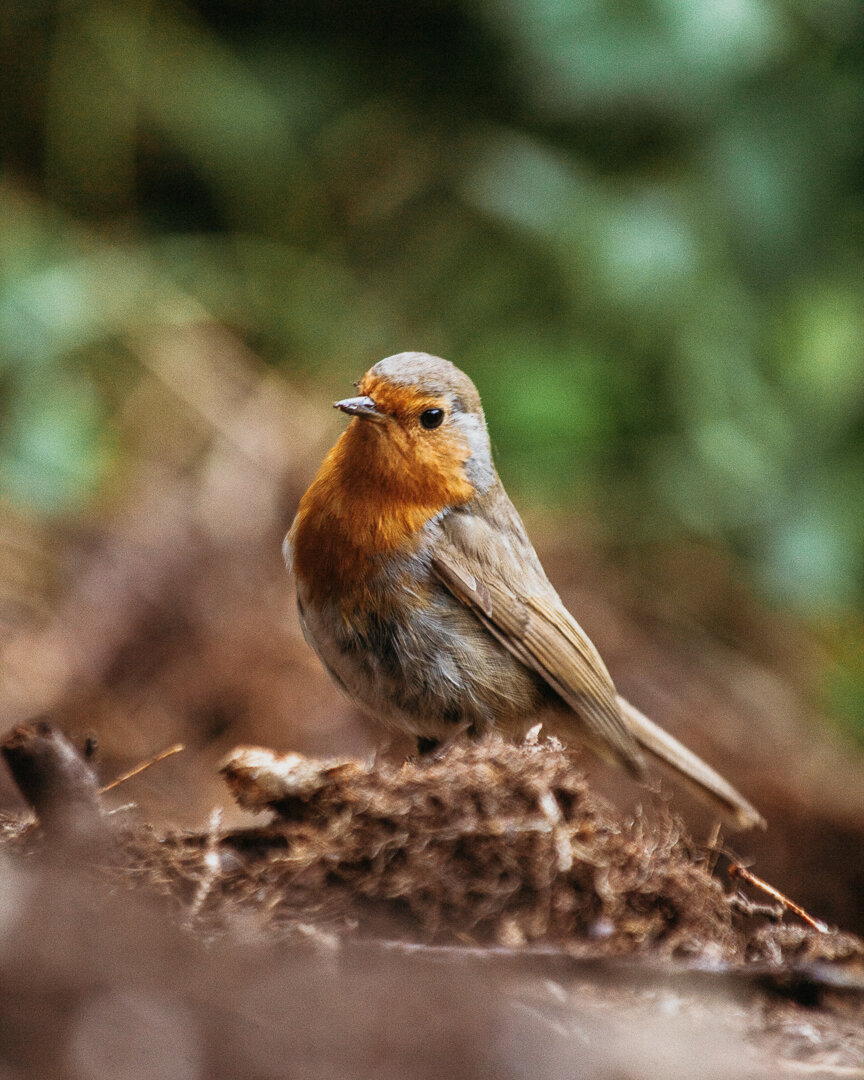
Information on Robin Nesting
Do Robins Mate for Life?
No, Robins do not mate for life, but they do remain ‘monogamous’ for the entire breeding season, including feeding and caring for fledglings.
It’s monogamy the way humans do it - multiple partners, but one at a time.
However, there’s no reason a pair can’t hook up multiple years if the right factors realign.
How Long Does it Take for Robin Eggs to Hatch?
Healthy female robins will lay once a day, with every robin egg taking around 13 days to incubate and hatch.
Mothers immediately eat the shell tol restore essential calcium used in forming eggs.
Temperature and the health of the mother impact incubation time. While predators, human activity, and normal environmental changes all decide the fate of the clutch.
As such, robins will lay multiple ‘clutches’ of eggs; with males often taking over the previous nest while the female lays the next bunch.
How Long Do Baby Robins Stay in the Nest?
Baby robins are blind, naked, vulnerable.
After 5 days their eyes start to open, opening fully around day 8.
By day 10, they are feathered; day 14 sees them physically equipped to fly but not without some practice and maybe a day or two of fattening up first.
Both parents will share duties, with the mother usually handing off when laying a new clutch.

Can You Touch a Robin’s Nest?
Robins have their own personalities and individually learned behaviors, so a robin may abandon any nest a person or predator is seen close to, immediately - or the robin may not care at all.
It will certainly notice, and might not return next year as a result because no potential threat is forgotten, even if the experiences so far were fine; less attention is always safer for nesting.
You won’t and can’t know the mind of the robin, and how it will interpret your actions, but you can know ahead of time that UK law will punish anyone for threatening the nests of these birds.
Protecting Robin Eggs
Robins are unsurprisingly protective of their eggs, even failed or empty eggshells are precious stores of calcium carbonate, a material they have labored to source bit by bit. Robins need their calcium creations far more than any collector does.
Yet, 40% of robins die every year, so ultimately many eggs will be abandoned, becoming food for the next bird.
Even keeping (especially trading) robin eggs in any form is illegal to protect robin eggs from capitalism, so destroy abandoned eggs found in nestboxes during September and January, else they will rot the box.

Cleaning Robin Nest Boxes
Think of nestboxes not as actual nests, but as a great place for a nest (and to hide in winter).
Such a good location that, ideally, the robin won’t need to do anything, but chances are that robins will build a nest in the box no matter how unnecessary.
In order to be used again, the box-for-nesting-in needs to be cleaned of everything that accumulates in ever the tidiest robin’s nest: decaying organic matter, parasites - threats to infrastructure and future brood health.
Clean Your Nestboxes in Autumn (Not Winter)
Cleaning a nestbox is a job best done in the autumn between nesting times and the coming winter months.
Robins mostly stay put in winter, so it’s highly likely they will use a nestbox to shelter during cold weather.
According to UK law, you are allowed to clear out old nesting material and deserted eggs between the first of August (better to wait until sept) and January 31st at the very latest.
Remove all organic materials to prevent rot, mold, stank
Use boiling water to destroy invisible parasites, fungi spores, etc
Eggs must be disposed of and can be composted, or simply returned to nature to break (Robins, like many birds, will eat eggshells in order to gain back some of the calcium they spent laying them, so most birds will be equally happy to eat them)
Wear gloves and a facemask as, even in tidy nests, harmful bacteria can breed quickly.

Sakura Cherry Blossom's History of 'Hanami' Culture

Winter Wait
Japanese culture has spread cherry blossom trees across the globe both intentionally as a symbol of friendship, as well as through the clockwork charisma of its blossoms, anticipated by billions of humans and uncountable trillions of pollinators every spring.
Following a season of uncomfortable cold, cherry blossoms are the dawn chorus of springtime: sudden, fleeting, and orchestral, conducted by a celestial guide 8 light seconds away: our Sun.
Humans and trees must pay attention to the changing length of today in order to predict tomorrow’s temperatures in order to track and guess coming weather patterns.
Animals stock up on resources, trees shed delicate parts; animals find a warm spot, trees cover their roots.
Then everything waits.

Spring Satisfaction
After months of leafless landscapes, bare branches, and brown vistas; any sign of spring is a beautiful omen but cherry blossoms are the star of the show.
Daffodils in the UK, garlic in Iran, tulips in the Netherlands; everywhere has its traditional sign of spring.
For the Japanese, there was Sakura: the ornamental cherry blossom, which has now spread to be a global celebration of cherry blossom festivals.

3000 Gifts of Pre-War Sakura
3020 trees of 12 varieties were donated in 1912 to Washington DC by Tokyo, after an earlier attempt resulted in the hugely important gift being piled up and burned.
Since the second donation wasn’t riddled with invasive pests, America replied with an unspecified quantity of dogwoods, destroyed during World War 2 after America responded to the attack on Pearl Harbor by the Japanese army.
America could only bring itself to vandalize 4 cherry blossoms four days after Pearl Harbour, renaming the remaining trees as: '“oriental trees” presumably to protect them, while also reflecting the loss of these tree’s association with international friendship.

Berlin Wall Replaced By Blossom Walk
In November 1989 a concrete effigy to conflict between nuclear-armed governments was brought down in front of a watching world, Japan included.
The Berlin Wall fell, Germans reunified, and cultural pollination returned.
Japanese citizens, via a TV show fundraiser, showed their support for this reunifying event by once again donating cherry blossom trees, which now populate many areas of Germany including parts once occupied by the Berlin Wall.
“Donated by Japan, cherry blossoms grace the paths where a wall once stood in Berlin. Walls divide. Flowers unite.”
Further reading: https://www.berlin.de/senuvk/umwelt/stadtgruen/stadtbaeume/en/sakura/index.shtml
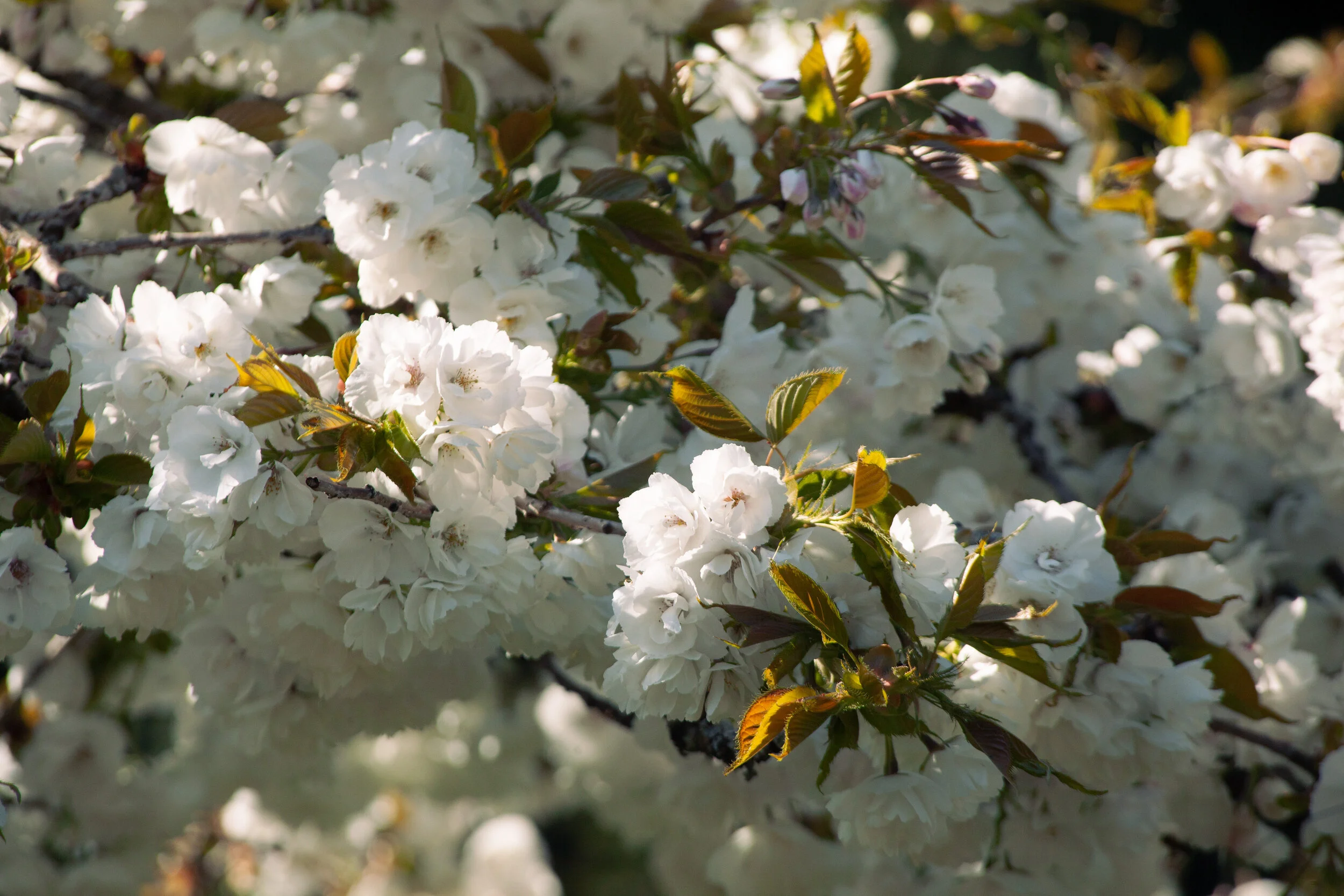
Earlier Every Year
Every year, an overabundance of people flock to walk and picnic under cherry blossom trees which only flower for 10 days - give or take, depending on weather, wind, and wildlife.
The best spots are so precious you should be prepared to wake before dawn in order to secure your place at the many public parks around the world: Tokyo, Washington D.C, Berlin, etc
Otherwise, expect to pay exclusive prices at famous locations such as the Samurai District of Akita in order to be seated beneath rows and rows of some of the best cherry blossom blooms in the world.

That’s Hanami
Not just a trendy word borrowed from Japanese in order to sell self-help books in English; Hanami is already embedded in western cultures thanks to other cultural concepts we share: gifting, friendship, and conservation.
Hanami is about walking to, relaxing under, and viewing cherry blossoms; while eating pre-prepared food alongside family and friends, in order to fully appreciate the temporary nature of life.
Some specific inspiration for under-blossom activities include:
Eating cherry blossoms (sakura onigiri, made with salted cherry blossoms)
Chatting under the influence (sake, beer, cocktails)
Spring fruit (strawberries are popular, berries in general)
Tea (obviously)


Stuff I Made Out of Soil During 2020 Lockdown Gardening

Tomatoes in Nkuku basket

Vegetables in charity-shop-purchase basket


Stacked Pumpkins on reclaimed table


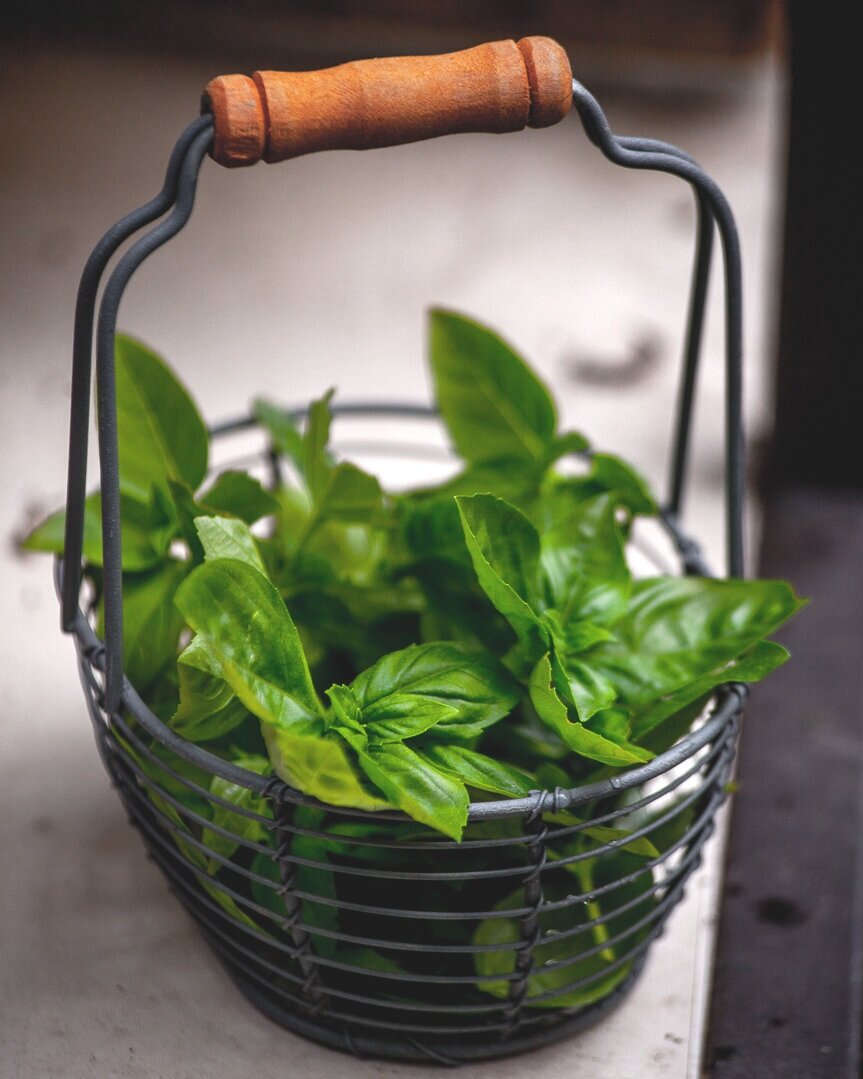
Basil, a necessary counterpart to tomatoes


Vegetables in late spring

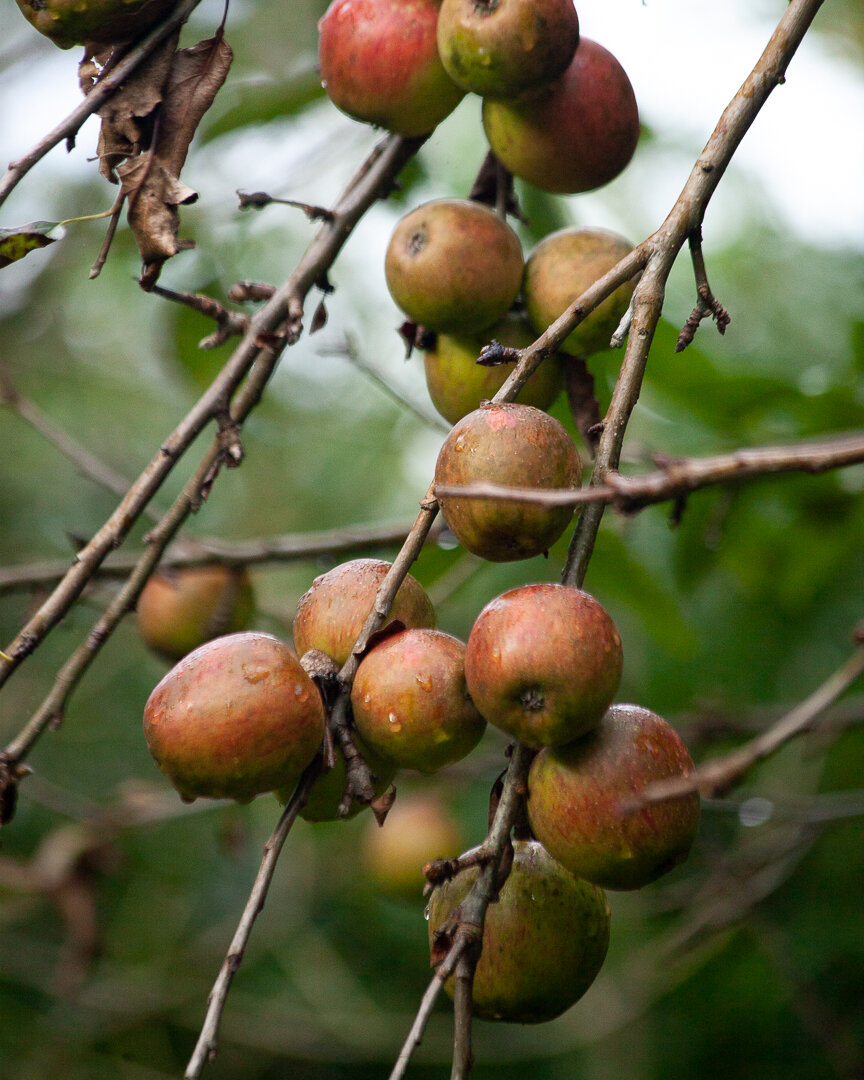
Apples bursting from the branches

Do Robins Recognise (and Follow) Humans?
Have you noticed that some birds watch some humans more than others?
Have you noticed that some birds watch some humans more than others?
Robins, first to the dawn chorus, do indeed watch some people more than others
They recognise humans as part of remembering patterns such as where and when food is
Robins like humans who fill bird feeders, dig around in the dirt, and have relaxed body language
How to See More Robins
See the evidence yourself: get a bird-feeder and a bag of robin seed; the seeds disappear while small birds appear, often, you’ll even spot them doing it.
Start feeding their needs regularly enough, and they’ll quickly learn to rely on you - especially during January and February.
So keep your new friends in mind - they’ll never forget you.
Leave a feeder to sit empty for a day so that birds will clean up the dropped seeds and be reminded that this might not be an infinite supply, urging them to forage for & remember other sources of food, using the extra energy you provided.
Treat them respectfully and don’t creep about too much, if they get herbivore vibes from you, they’ll get surprisingly close.
If you move like a sneaky predator, then your unstealthy human body will broadcast a threatening signal to every bird paying attention (all of them).
What Does a Robin Following Me Mean?
It means you’re not acting like a predator, at least in the opinion of a robin.
Robins follow larger animals who disturb the ground with their movements, possibly scuffing up grubs, or just making it easier to dig for worms by moving leaves and other debris out of the way.
Do Robins Recognise Humans Faces?
Robins can definitely recognize you by your movements, schedule, and possibly other signals possibly including your face.
Studies specifically show that pigeons and crows can recognize human faces, hold grudges against those humans, and will voice their opinions of you to other birds.
So not only are bird brains smart, robins have been recorded to live up to 19 years, giving them plenty of time to get to know you.
The problem is, Robins have a high mortality rate in their first 2-3 years, while they get wise to the world.
So if you want to make lasting friends, help them out so that they live long enough to remember your face.
Lure Robins for Free
Mark a patch of soil that you can turn over regularly to give the birds fresh access to lots of worms and other bugs, as well as loosening the soil for them to dig themselves.
It’ll also warm you up in the morning.
If you have an open composting system, are preparing soil, or are clever enough to mulch the soil around your plants in order to feed & protect them, you’ll also give the birds a reason to hang around and eat unwanted bugs which threaten your crops.
They’ll also pick their fair share of berries if you let them; which is fine as most plants that grow berries are inedible to humans.
However, strawberry growers should take steps to protect their tempting crops.
How to Get More Robins in Your Garden
All you need is seed in a feeder, or some soil you can toil regularly.
Soon you’ll be recognizing their faces.
“Stay, little cheerful Robin! stay,
And at my casement sing,
Though it should prove a farewell lay
And this our parting spring.
Then, little Bird, this boon confer,
Come, and my requiem sing,
Nor fail to be the harbinger
Of everlasting spring.”William Wordsworth, To a Redbreast, In Sickness.
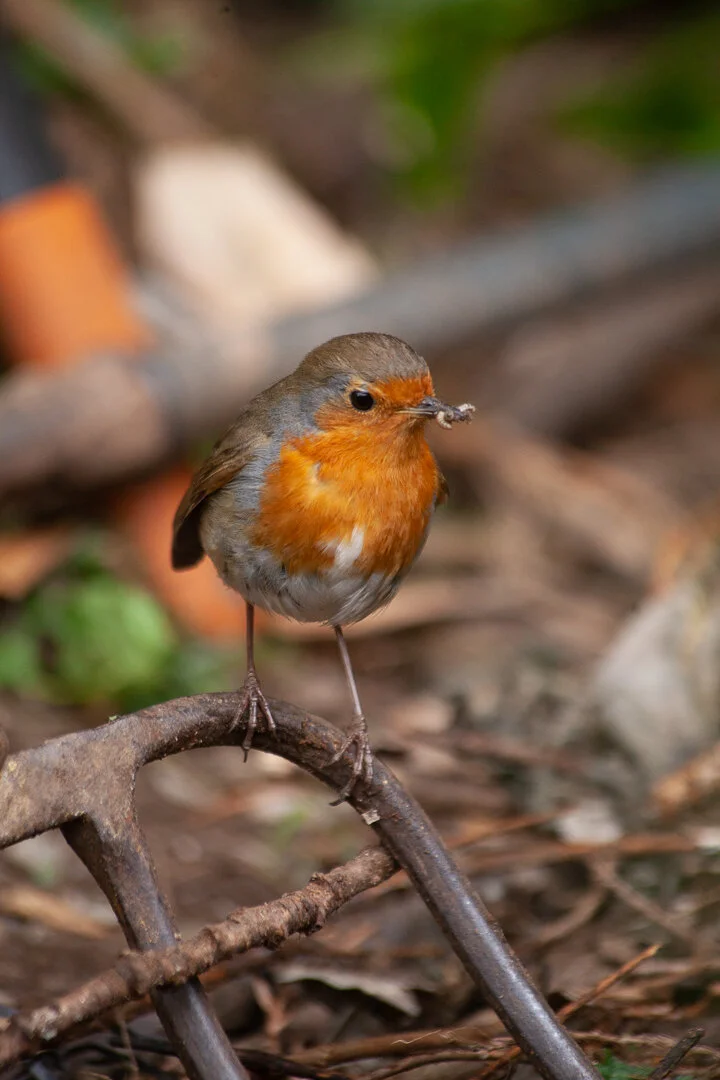
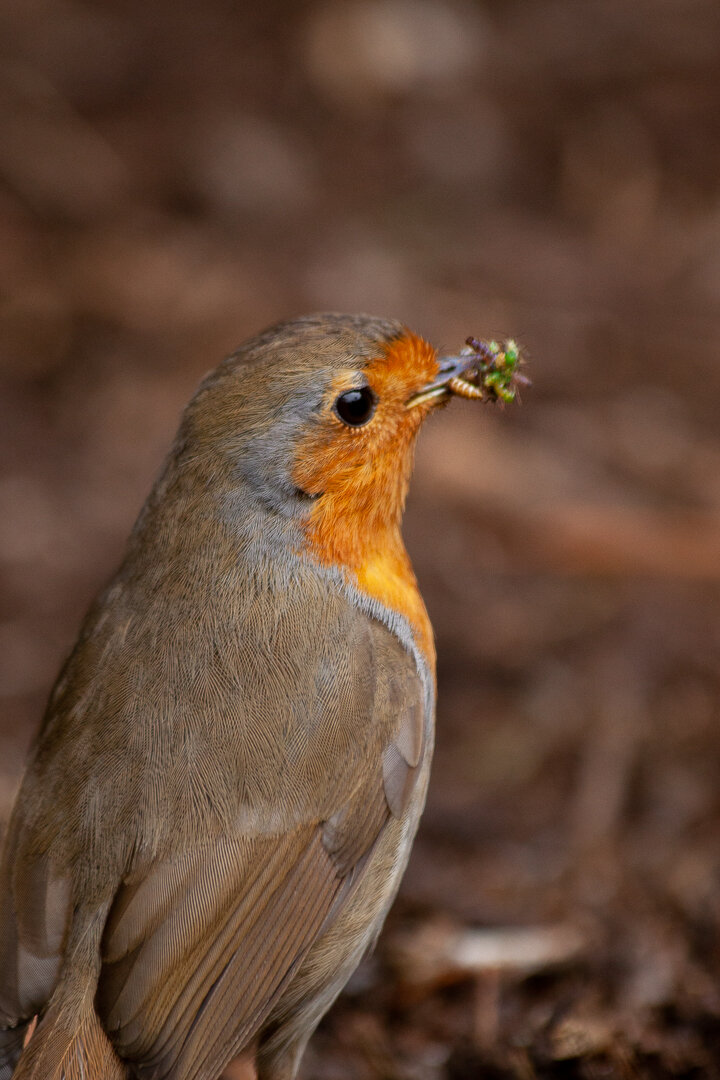
Robin on a fork with a grub in mouth, Devon, UK
Robins are symbolically associated with spring and subsequent associations with rebirth, particularly remembering the dead, especially those lives lost during winter. In legend, they often serve as messengers of gods across multiple religions.
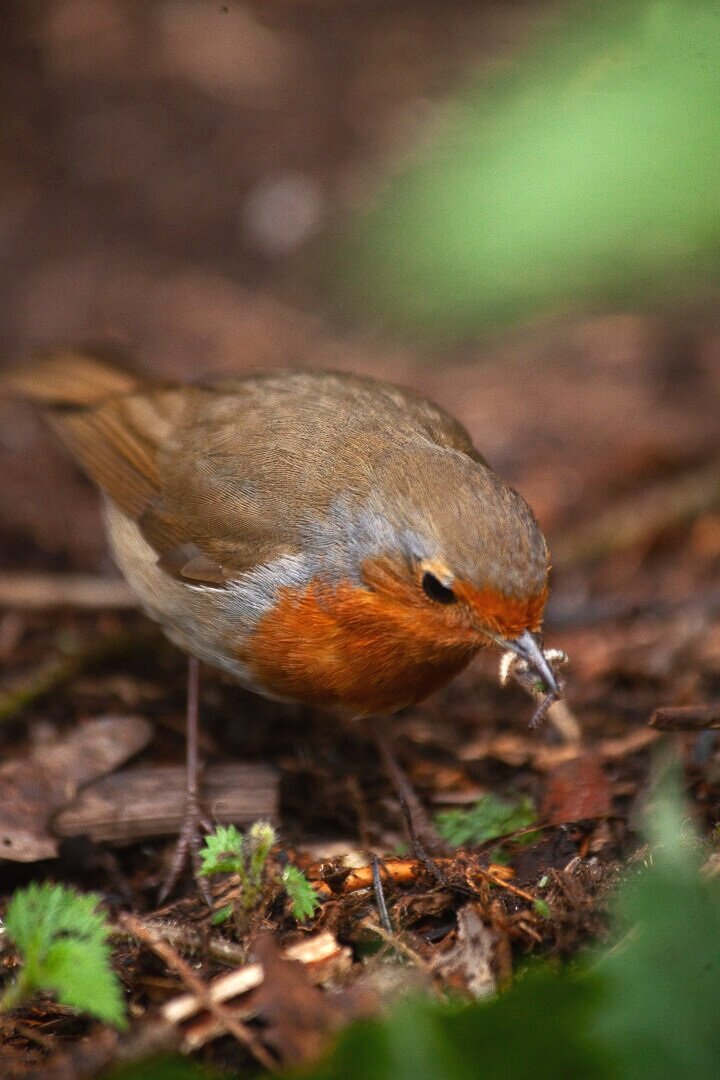
Robin feasts on grubs from upturned soil, Devon, UK
Robins can be seen all year round, but their behaviour changes with the seasons, just like humans. Seeing a robin means letting them get close to you, which requires not trying to sneak around, or staring at them too much. Sideways glances mimic herbivore behaviour better. Sometimes, they just won’t be in a social mood - we can all relate to that.
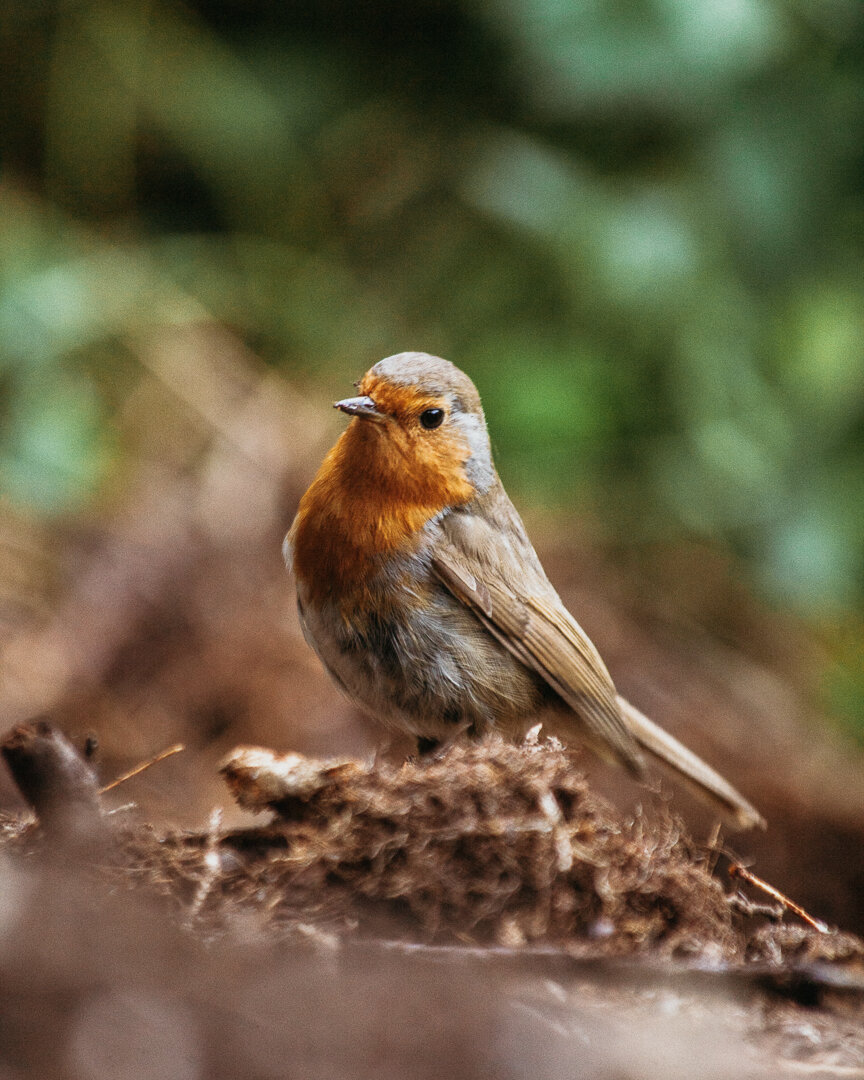
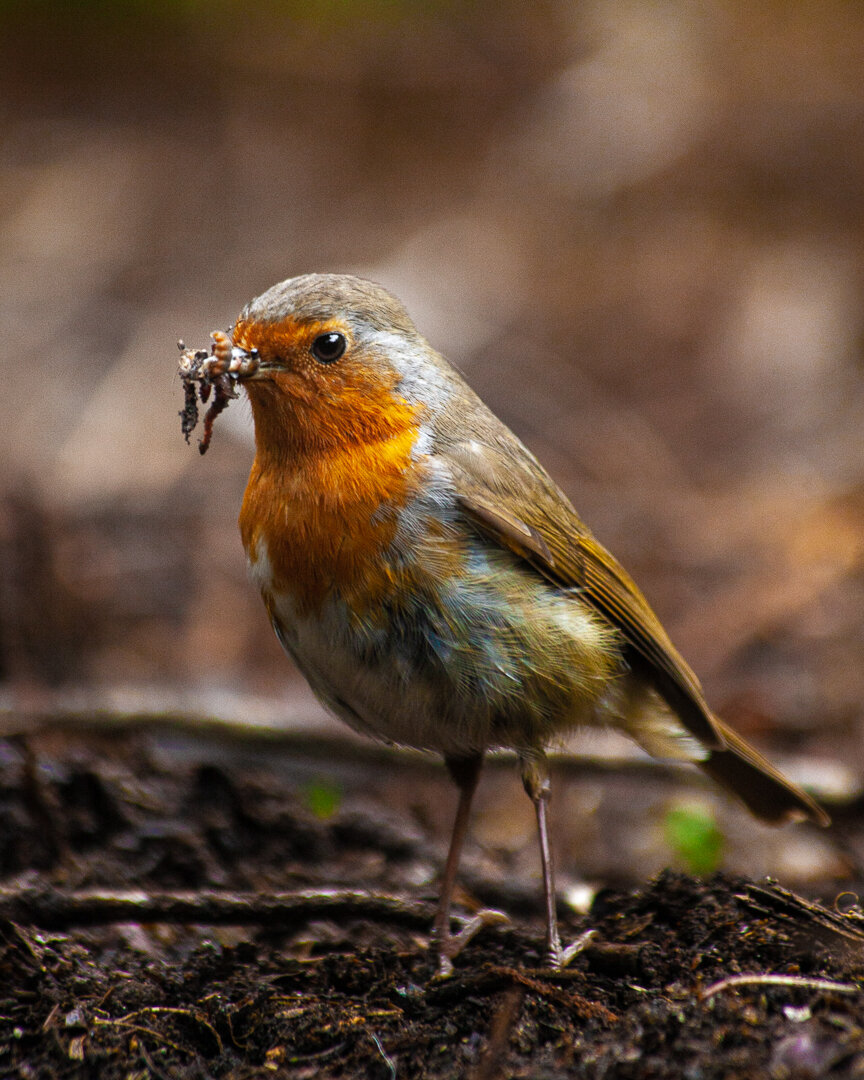


What are your own experiences with robins? Let me know in the comments below
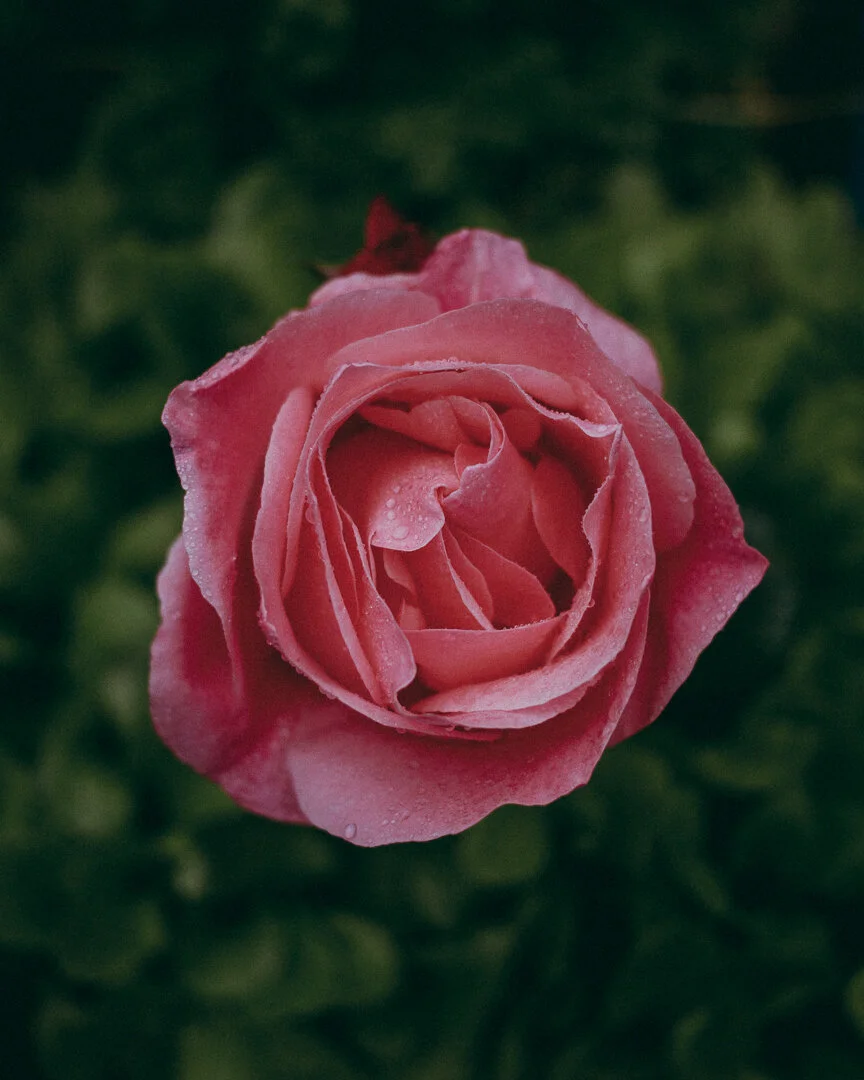
Rows of Garden Roses to Raise Your Rainy Spirts

Garden Rose
Roses evoke in me the same feeling as when I spot a deer or interesting bird, something incredible in my own ‘back garden’ which feels rare despite being relatively common most of the year, and almost a daily occurrence if like me you have access to a rose garden.
Despite the overgrown rose garden immediately outside my front door, which blossoms at times when it feels like it, I’m perennially amazed at every flower.
Identification by AI applications, like the one on my phone, simply deliver a verdict of ‘Garden Rose’ or ‘Common Rose’ (which I think are the same thing) for most; else, ‘Tea Roses’ for others.
It’s an ongoing project, as is photographing them.
See the results of my astonishment in these images which I dedicate to a good Canadian friend of mine, a great lover of roses.

TEA ROSE
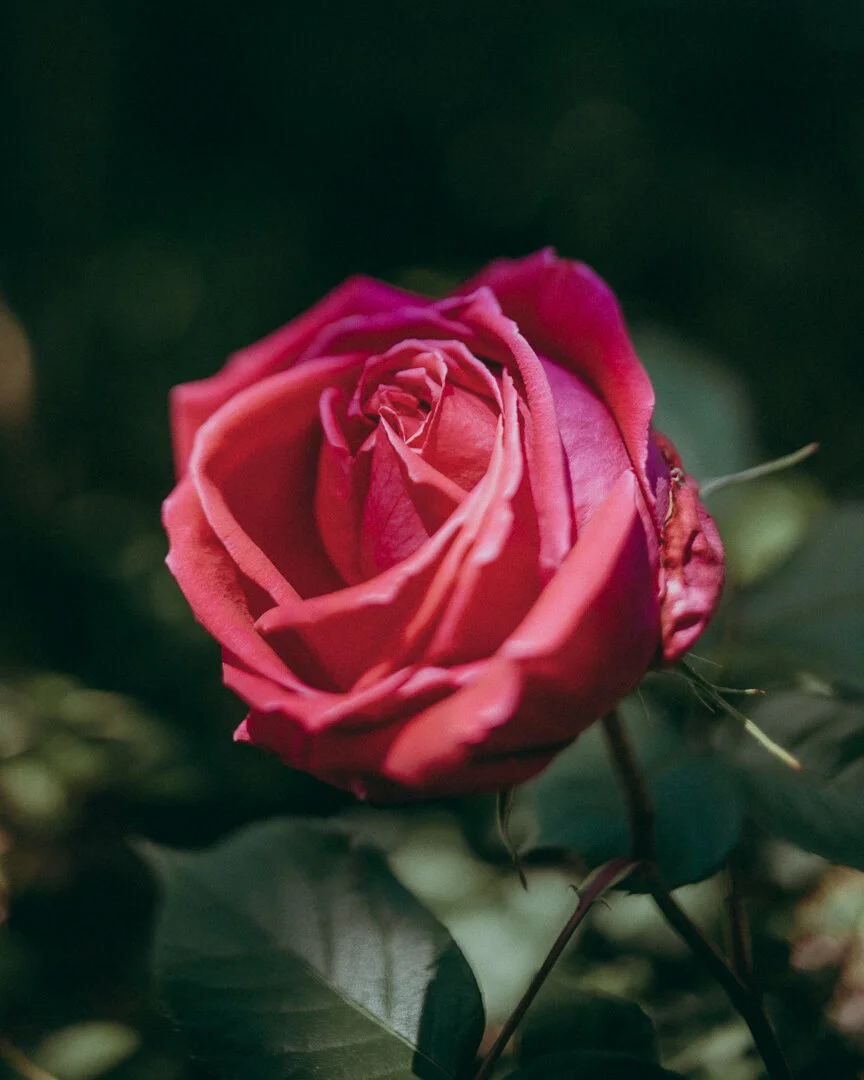
GARDEN ROSE

Assorted roses




Among the Bees and Blackberry Petals
There’s a reason, other than nectar, that drives these bees to hunt among the brambles
For an evening, I put myself among the bee’s.
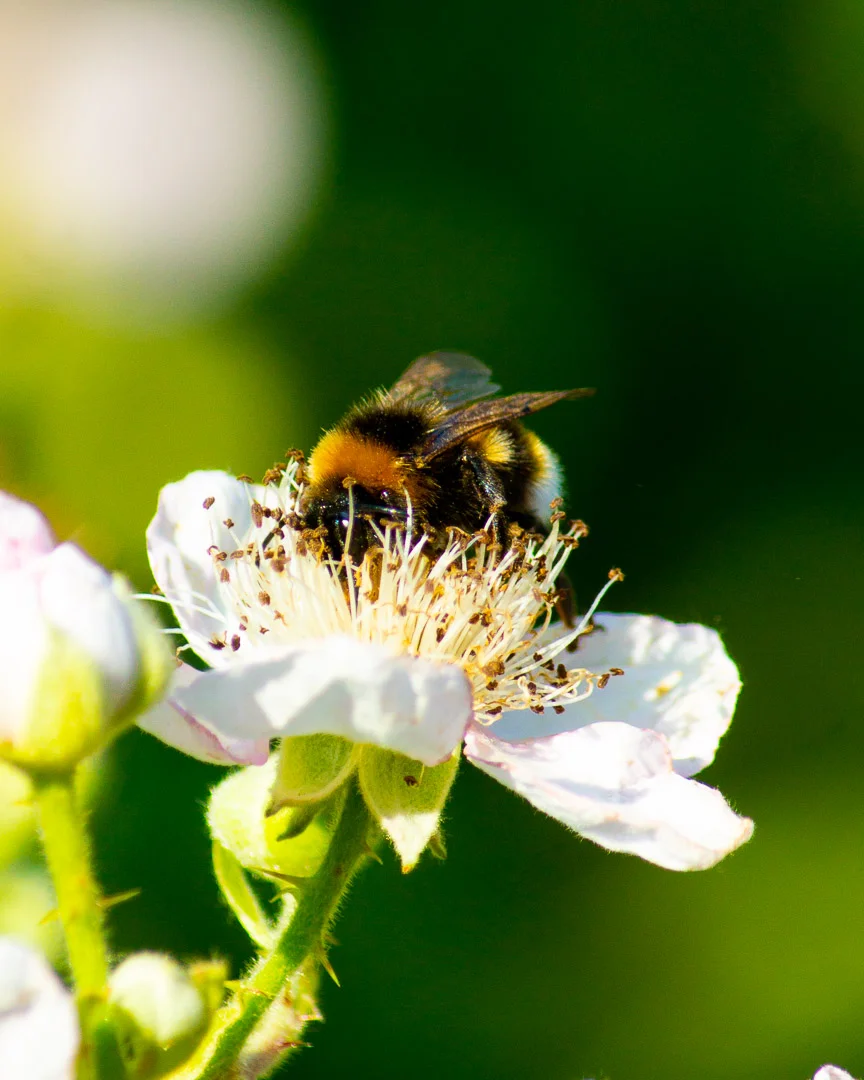
There was a camera between us yet, through the lens, it was as if we climbed the tall stems together like little mountaineers among a jungle of vines, clutching at the tips of leaves, leaping from perch to perch in search of blackberry nectar.
From flowers whose fruits will flourish in the autumn mostly thanks to little bees, whose daily routine includes intentionally growing the world’s forests and unintentionally feeding millions (probably billions) of other animals, too.


Fueled by liquid honey, an energy-dense food which never spoils. Which they make so much of, that it also feeds a huge portion of the human species; stored inside structures made of a material they also produce themselves.
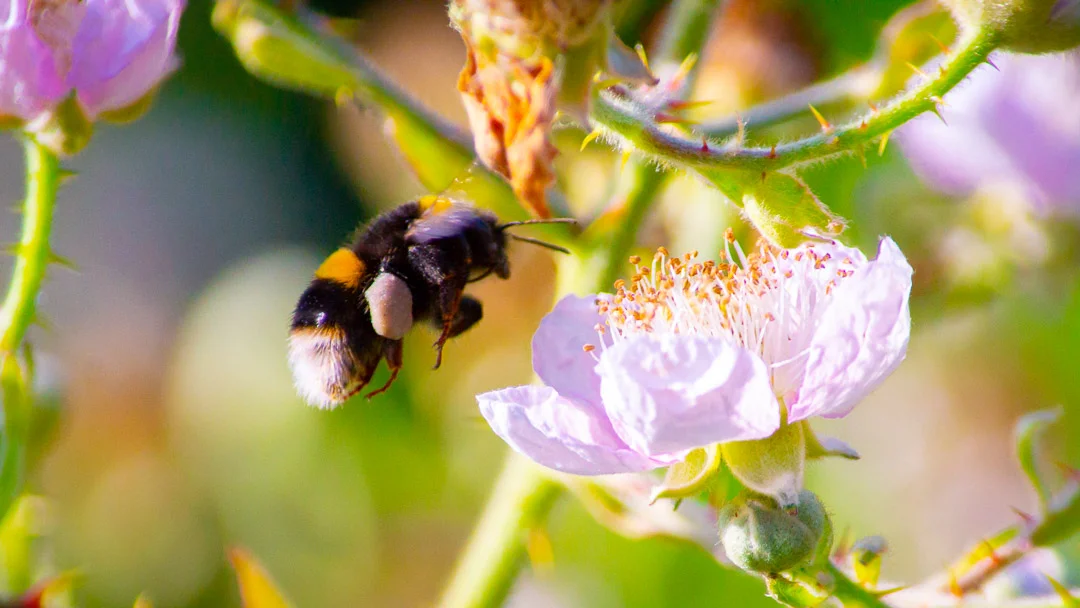

As I watched them, the bees dodged brambles; and as I fixed images of them, they launched their furry bodies through many loops of thorns; engaging their wings only if they couldn’t make the jump, or were interrupted mid-flight by the unpredictable breeze.
Mostly, they climbed; clambering, jiggling, and wiggling from flower to flower in search of sweet gold, the product of water, time, and sunshine.

But there’s another reason besides the nectar, that drives these bees to hunt among the brambles: pollen, which they feed to the larvae back home - their bee babies.
Buy the Print

Professional-quality A4 photopaper printed with 10x8inch print of a bee launching from a pink flower, a blackberry blossom, into flight.
Gallery of bees




Book Review: Read This if You Want to Take Great Photographs
Henry Carroll’s written tome is one of those well-designed books that explains itself and the concepts within with expert clarity. “If you can’t explain it to a 10 year old, then you don’t understand it yourself” goes the saying.
Well then it’s clear Henry Carroll understands photography; which means he understands that every photographer has their own selection of knowledge regarding the tech and art of picture making, and he can explain it to all of them.
Since photography is a collection of abilities and knowledge, “Read This if Your Want to Take Great Photographs” is both a linear and non-linear education depending on your reading habits; beginning with the camera as a cardboard box with a hole in it, and advancing from there, providing as minimum of a technical crash course as possible using infographics to maintain its referable, pocket-manual form.

Read it backwards, or pick at a random chapter each day, even if it’s a chapter you’ve already read; each section is a timeless nug of wisdom, stripped to the essential truth for anyone to understand.
Photographs included in the pages are exclusively masterpieces, and each one is necessary to directly illustrate the techniques and considerations explained in the book, often being referred to in other sections as to reuse prior references as well as tie chapters together into one whole - excellent - book.
A book I highly recommend.
Mine was gifted to me by my good friend Kai’a, and rather than being on my bookshelf, it’s tucked in my camera bag for inspiration on the road.
Again, highly recommended for any photographer of any skill level.
“Split into five sections, the book covers composition, exposure, light, lenses and the art of seeing. Masterpieces by acclaimed photographers – including Henri Cartier-Bresson, Sebastião Salgado, Fay Godwin, Nadav Kander, Daido Moriyama and Martin Parr – serve to illustrate points and encourage readers to try out new ideas. ”

Blurry Photos are Better
Obsess over sharpness and you'll never move forward.
Obsess over sharpness and you'll never move forward. Time, like the wind, pushes invisibly on everything; don't be afraid to let a little fourth dimension into your double dimensional pictures of this three dimensional experience.
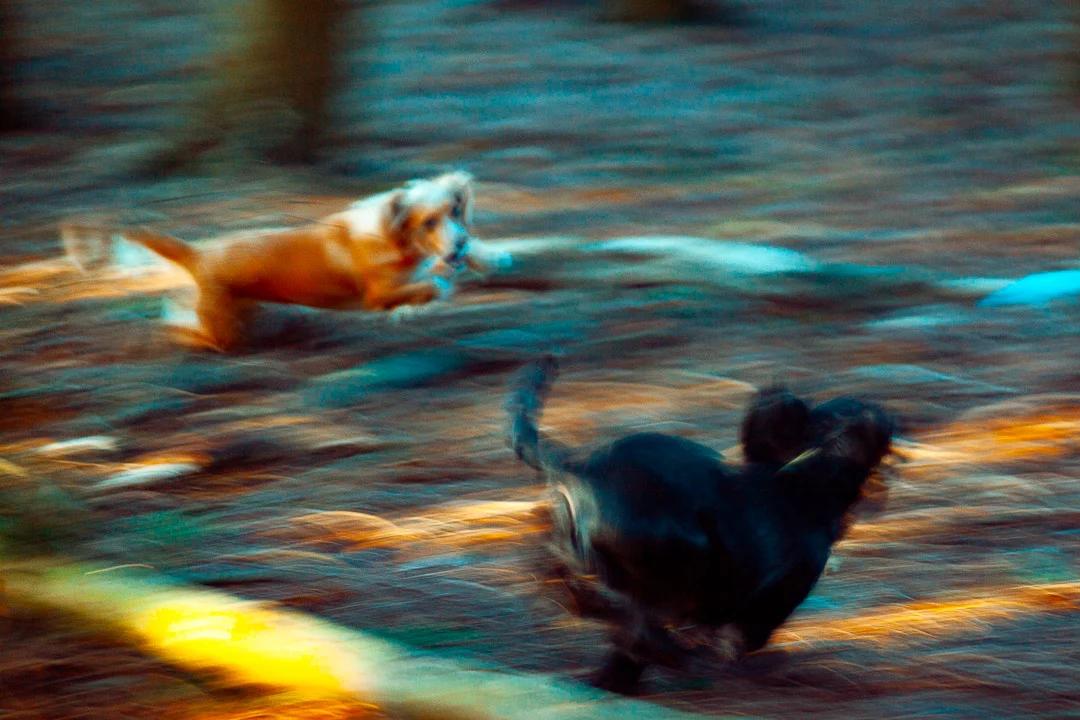



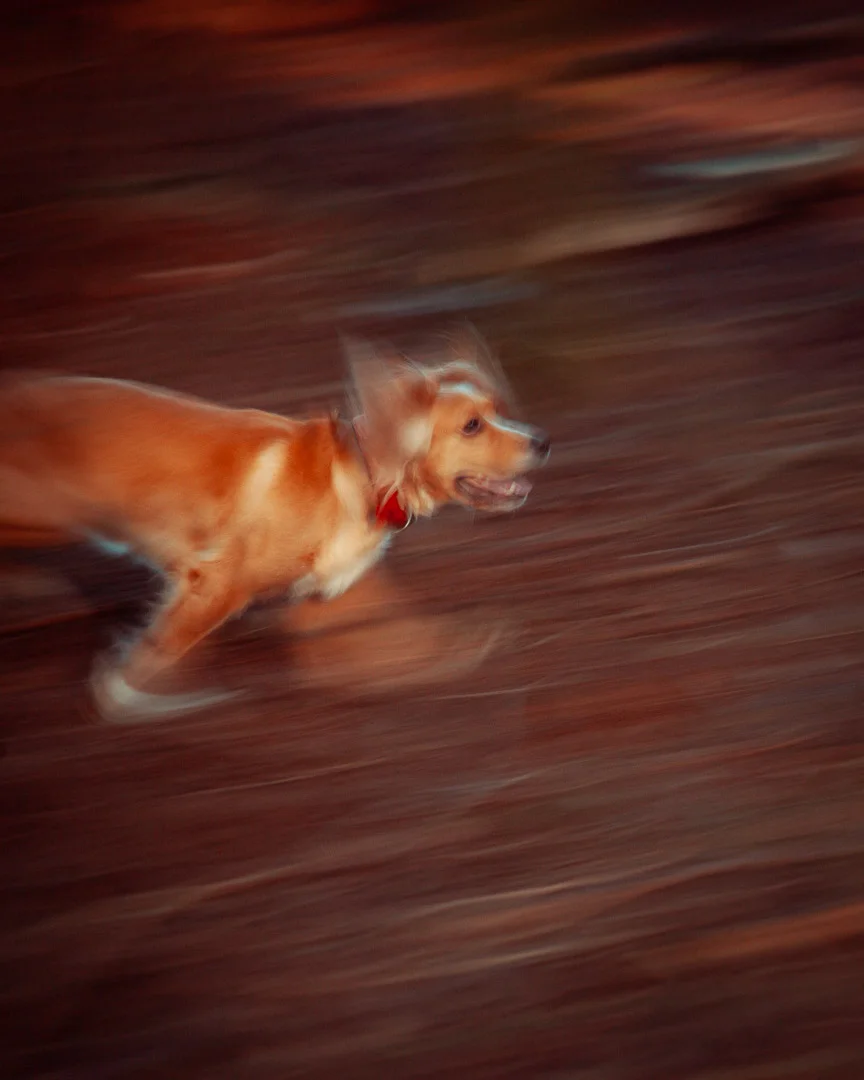
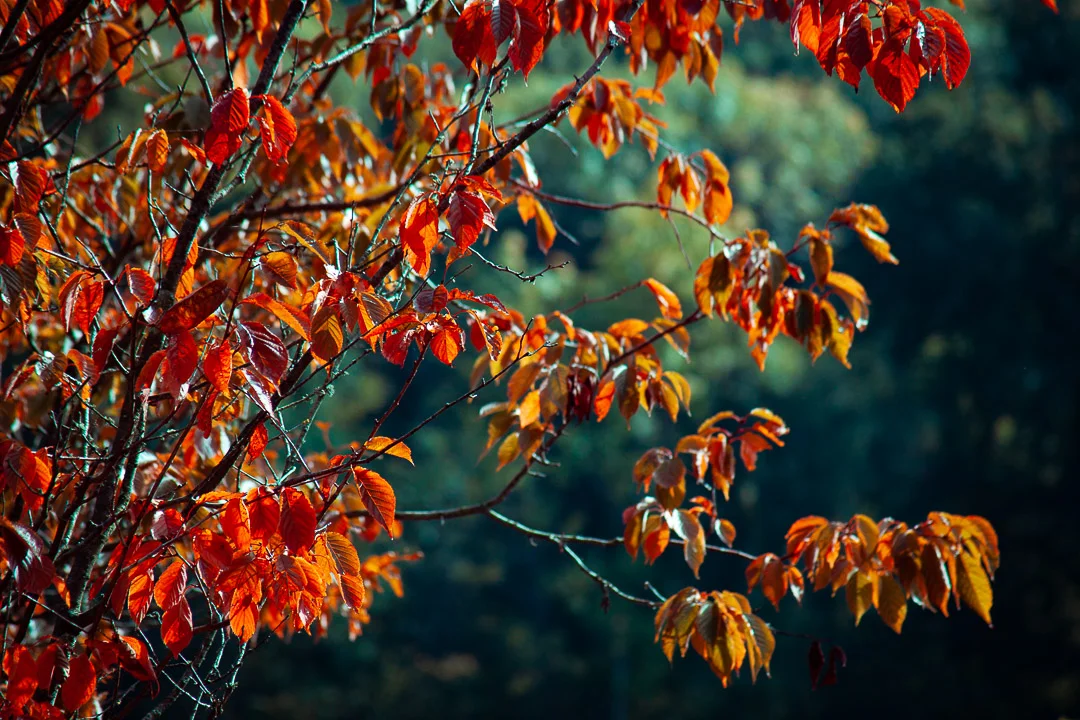
Autumn Over Gaunts Estate


Autumn hit as hard as summer had and so pushed the canopy to oranges and reds so fast it felt like it arrived overnight.


You can picture it happening.
Another burning orange sunset, sat on a black horizon, yet today’s more distant than yesterday, the space between them just great enough to change the timing of the sunset, at just the right angle; resulting in redder sunsets that last longer.

Before this, the greens had been yellowing slowly.
Some had reached orange by now, but even some of the greenest leaves had shed to red overnight.

Once this red autumn curtain falls and becomes a red carpet for winter, branches and tree trunks will steal our hearts for a season and a half.

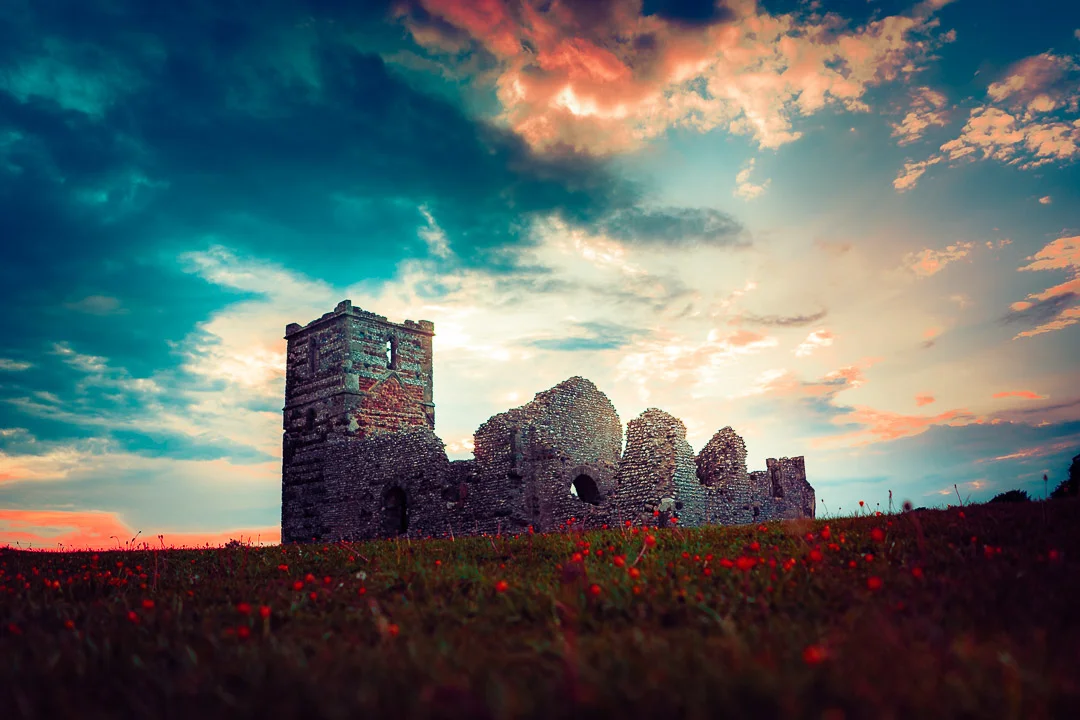
Knowlton Church is Protected by Ancient Corpses
Melting for four millennia, these dollops of human-made earthworks sink under the trendier religions, whose walls of flint and stone may be materials of a different kind, but it’s all sand in an hourglass to a patient future.

Knowlton Church Earthworks

"Church Henge" at Knowlton
I Watched a Dorset Horizon Burn to Charcoal in Seconds

Sunset Stanbridge, Hinton Parva
Another blushing sunrise, like hot red jam tipped on an already baking landscape; sweet scenery, caramelising into a black horizon, with a final ball of melting yellow shrinking under a cooling orange blanket, turning darker shades of purple until deep blue and unseen ultraviolet spectrums.


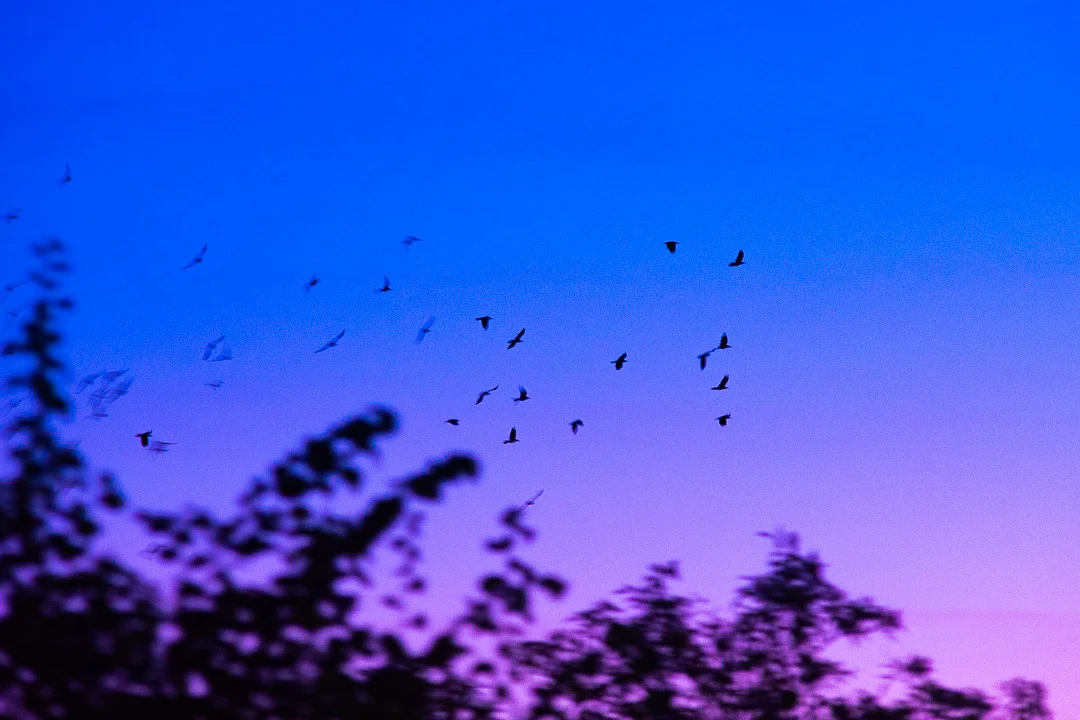
Beneath a Purple Stanbridge Blanket
And all at once, the still blue blanket that was the twilight sky, was beaten by a silent hoofbeat which shook crows from bending treetops like black fruits dropping, or seeds sent high on a sudden gust of wind, which caught under each crow's wing and lifted the entire murder upwards, like shadow puppets yanked by unseen strings.

Following was a falling pause of sideways gliding, between trees and open field, waiting for more wind that came stampeding from the west, where a sunset falls asleep beneath a purple blanket, behind the silhouettes of trees on the horizon.

Stanbridge, Dorset
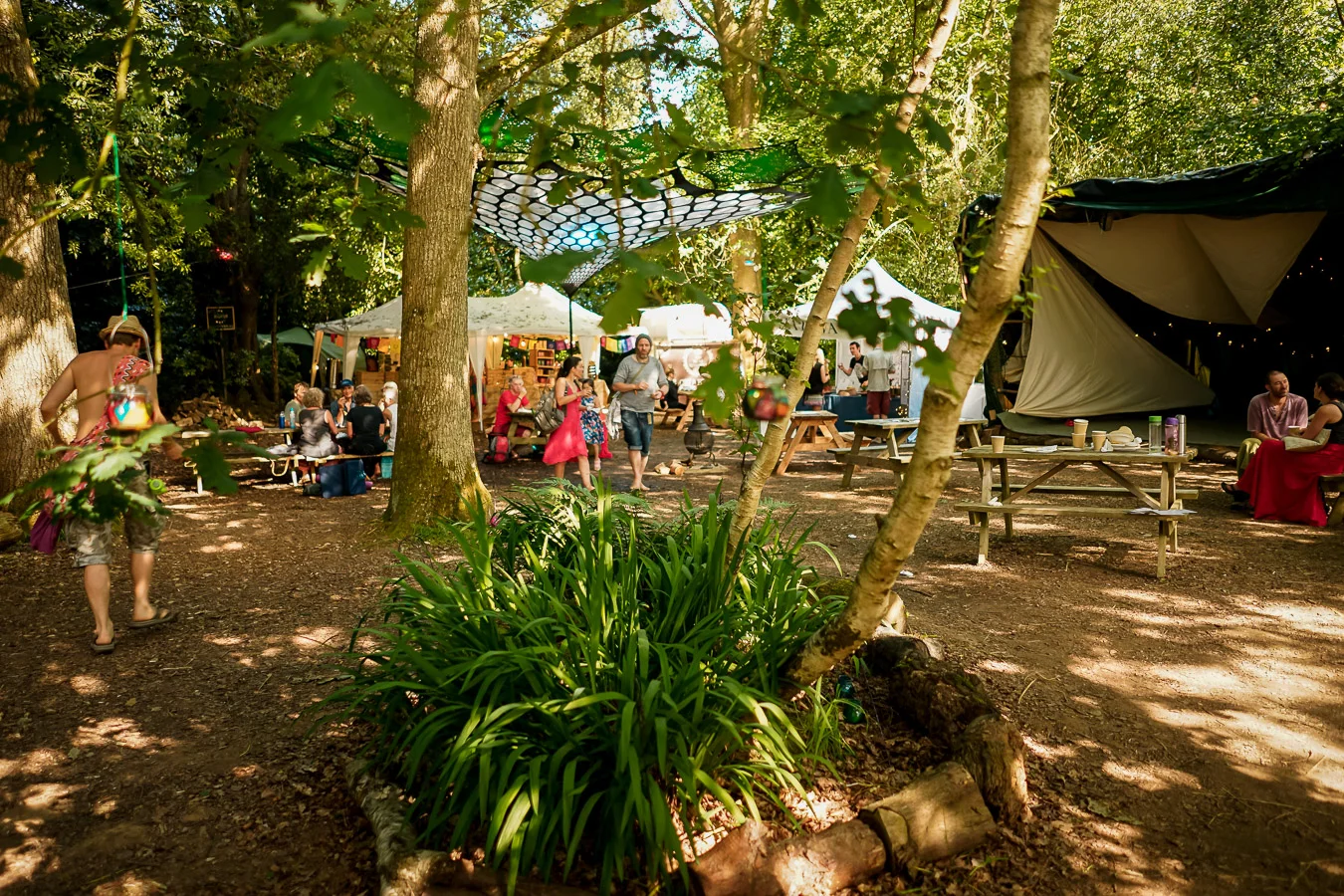
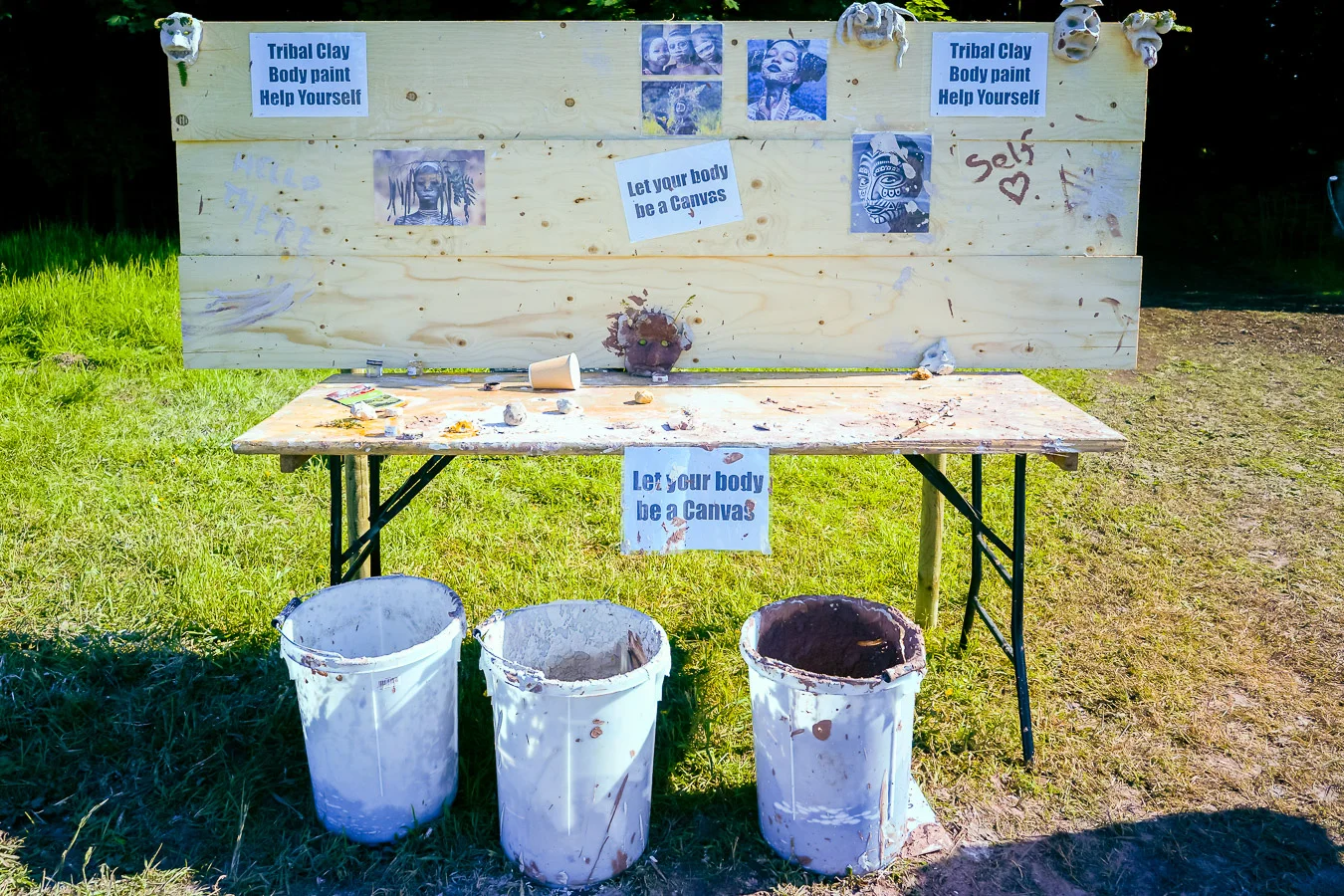
Pictures of Colourfest 2018 (at Gaunts House in Wimborne, Dorset)
As these pictures of Colourfest 2018 show, Gaunts House in Wimborne was full of vivid signs of rejuvenation, relaxation, and chillness, so we went and ate a lot of very good veggie food.
Honestly, the offerings at the four day long festival are incredible. And everyone is just so happy. Doing yoga in the sunshine together, or dancing in the shadows of ancient trees, else they're relaxing under the sky and laughing.
The gardens of Gaunts House and the landscape of the Common alone are full of enough history and wild nature to fill weeks of adventure, so Colourfest was the perfect oasis to feed our souls and fuel our bellies between exploration.



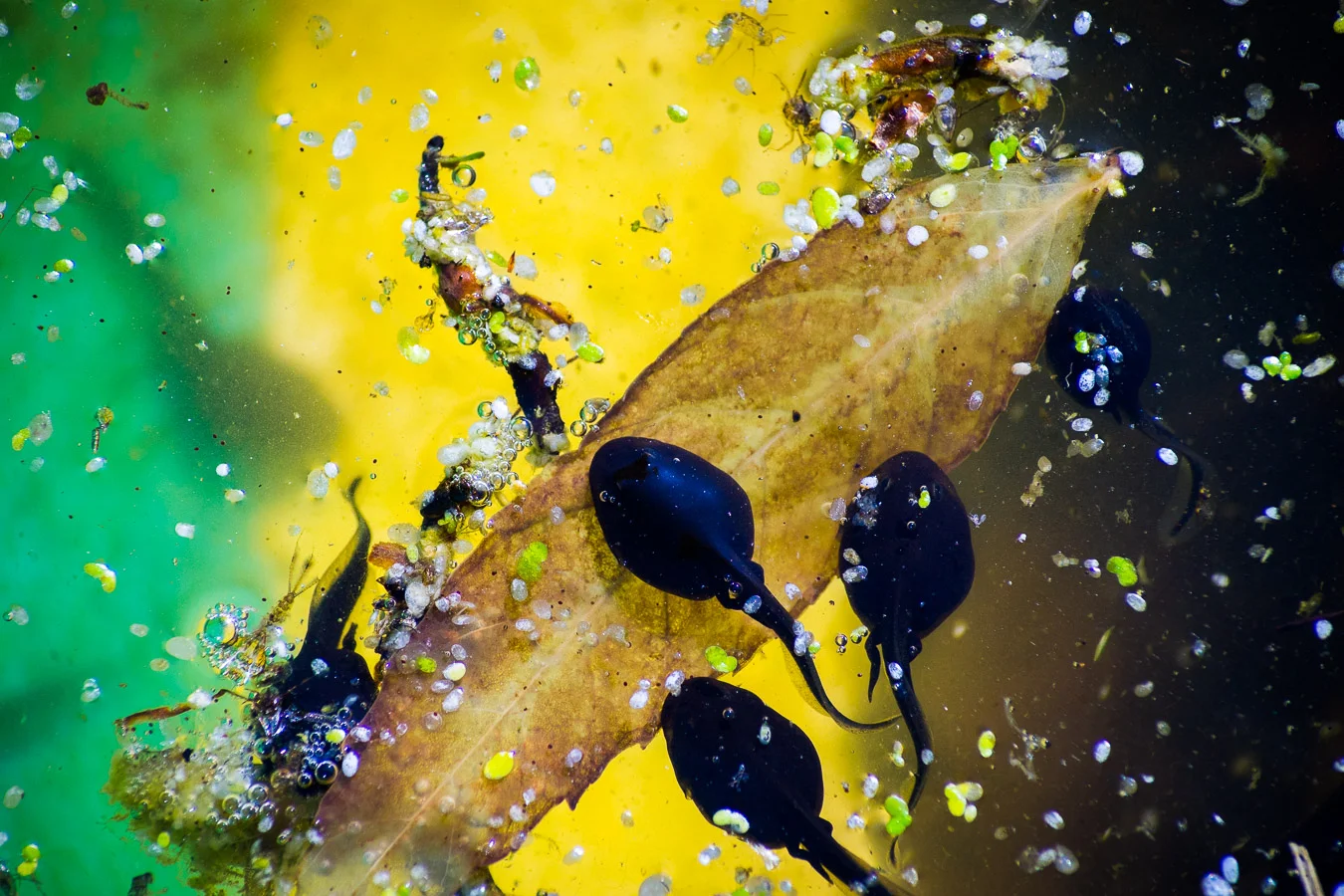
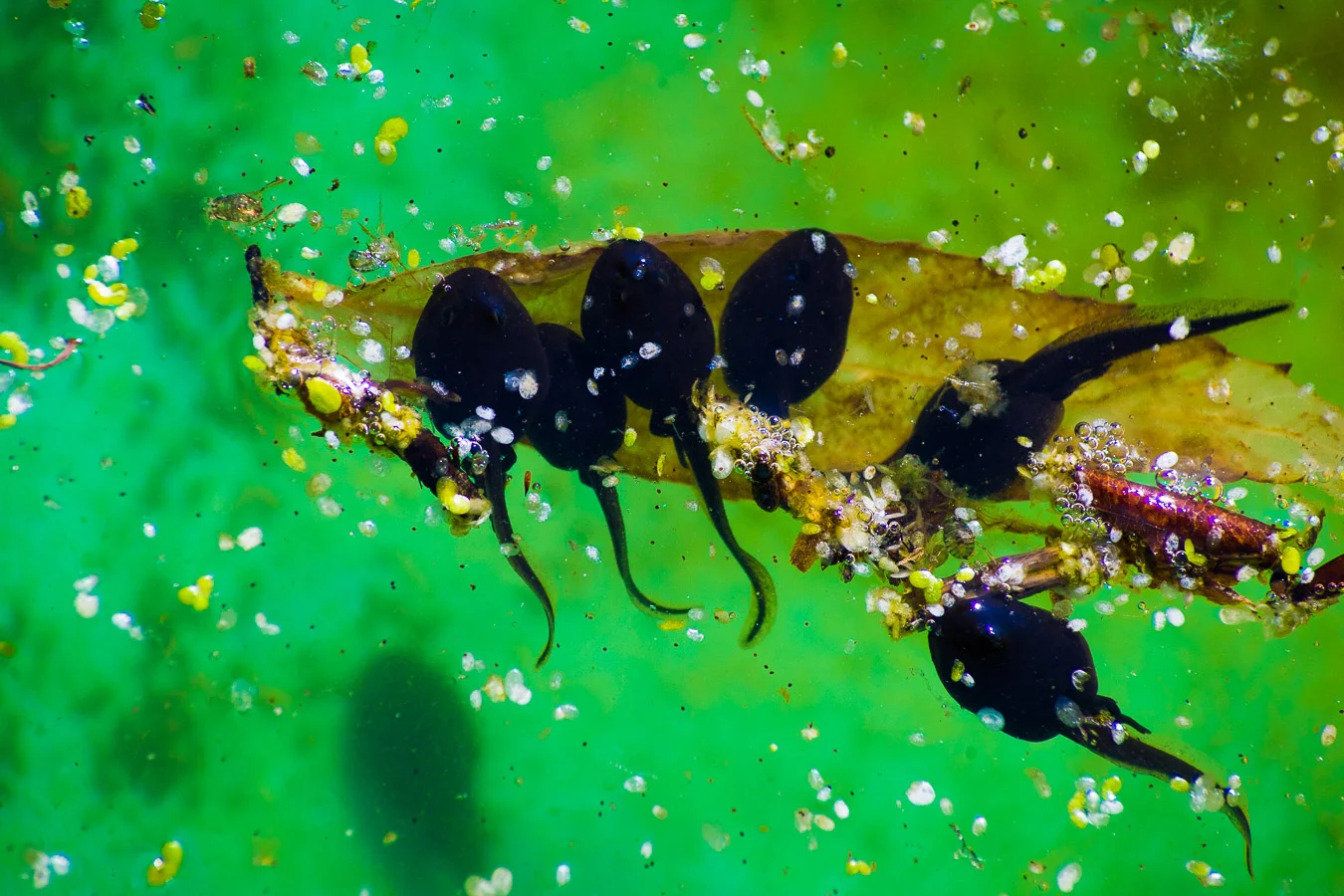
Newts and Tadpoles in an Old Pool
Frogspawn the shallow section. Newts in the deep end. There’s life in this old pool and they’re not exactly friends.

Newts and tadpoles living in a somewhat fragile harmony


Stonehenge in the Snow

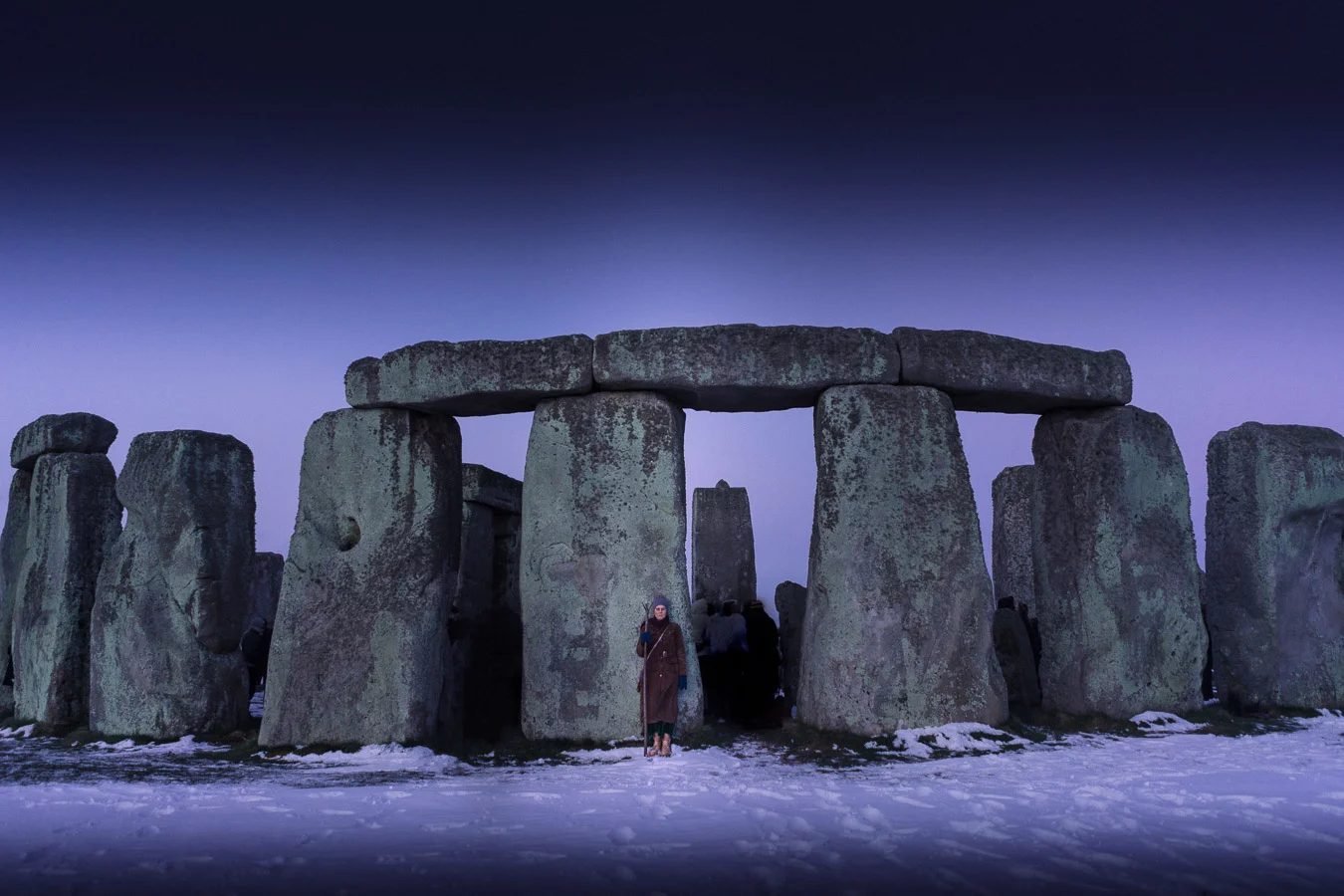
Two moments of worship at Stonehenge: druidic song and dance within the ring of ancient stones and quiet solitude outside of them. I danced during both.

Overall, 'rarity' was the theme of the day for me and the few people there, and even the ancient stones themselves. They're blue y'know, I didn't make them look like that. Blue when wet, like when moistened by the rare British snow.

AN absolute hero who kindly shared his mead with us

Imogen being cold
It was one of the very few annual events when you're able to cross the fields and walk among the stones; touch them, lick them if you like, I saw it happen. I even saw a strange man's nipples; no licking involved there.

Yet, the clear sky was rare enough; the snow, rarer. Even just walking among Stonehenge is a very rare opportunity. But all of them together? With a purple sky at dawn and almost no tourists thanks to exaggerated weather alerts? R a r e.

I did all the things you do at Stonehenge, which is description enough. Most of all, we all summoned Spring in, and wished everyone - especially you - the very best in life. Feel free to order this framed print as thanks. Just do it before the snow comes back because I'm not a very good wizard. I do try though.

It's Imogen! (burntgingerrose on Instagram)
Snow in Gaunts, Winter in Wimborne, and "Snowsomnia" in Stanbridge

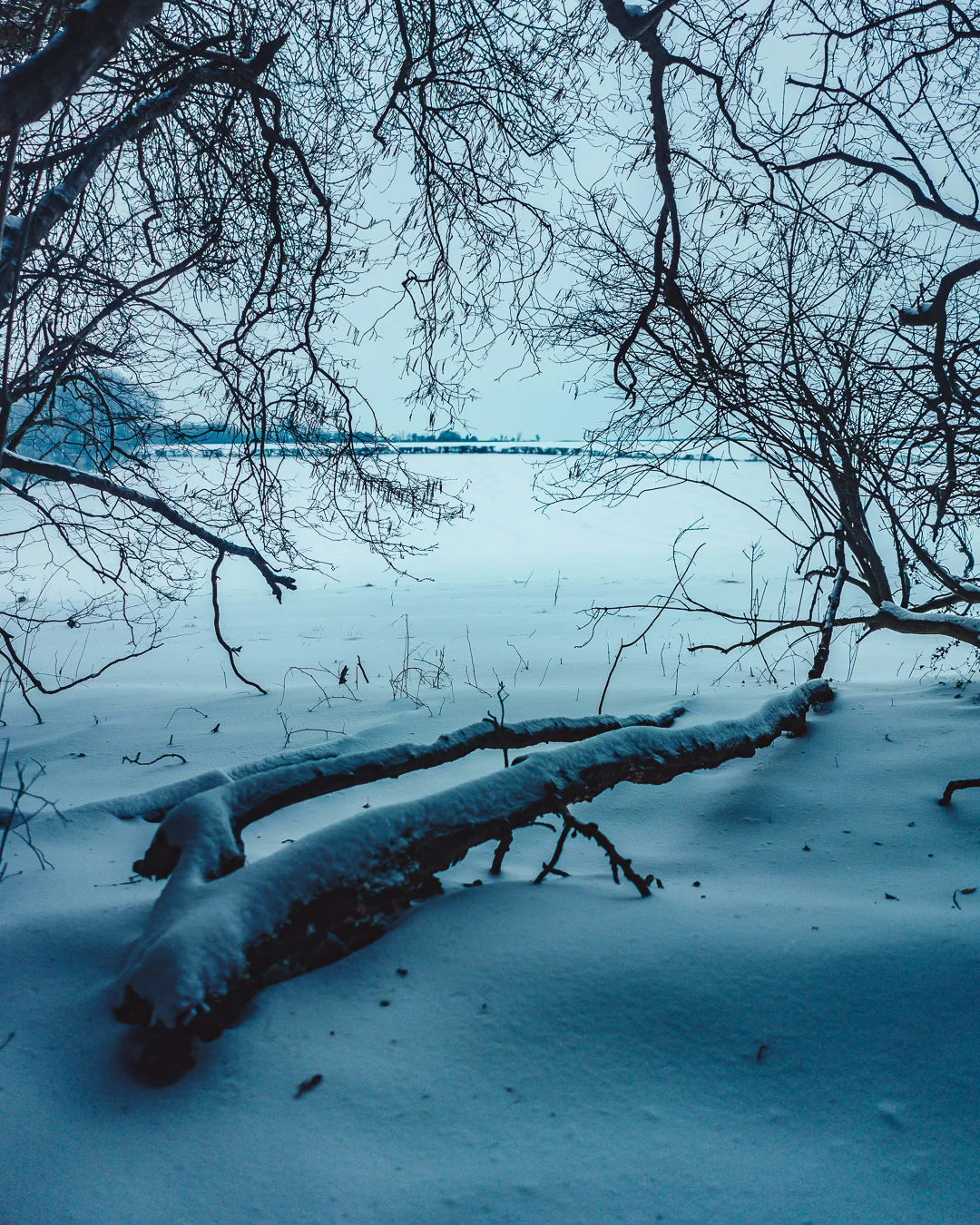
Fallen Snow on Fallen Branch / Gaunts Common
My body clock is all messed up and has almost reversed since sleeping so damn much this winter. I've been waking up to morning walks that were actually sunsets with my morning coffee, which was really an evening brew. But today, I've been up all night, and real morning leaves me feeling way too tired. I might go to sleep. It's morning for everyone else but the evening for me. Good night morning people.
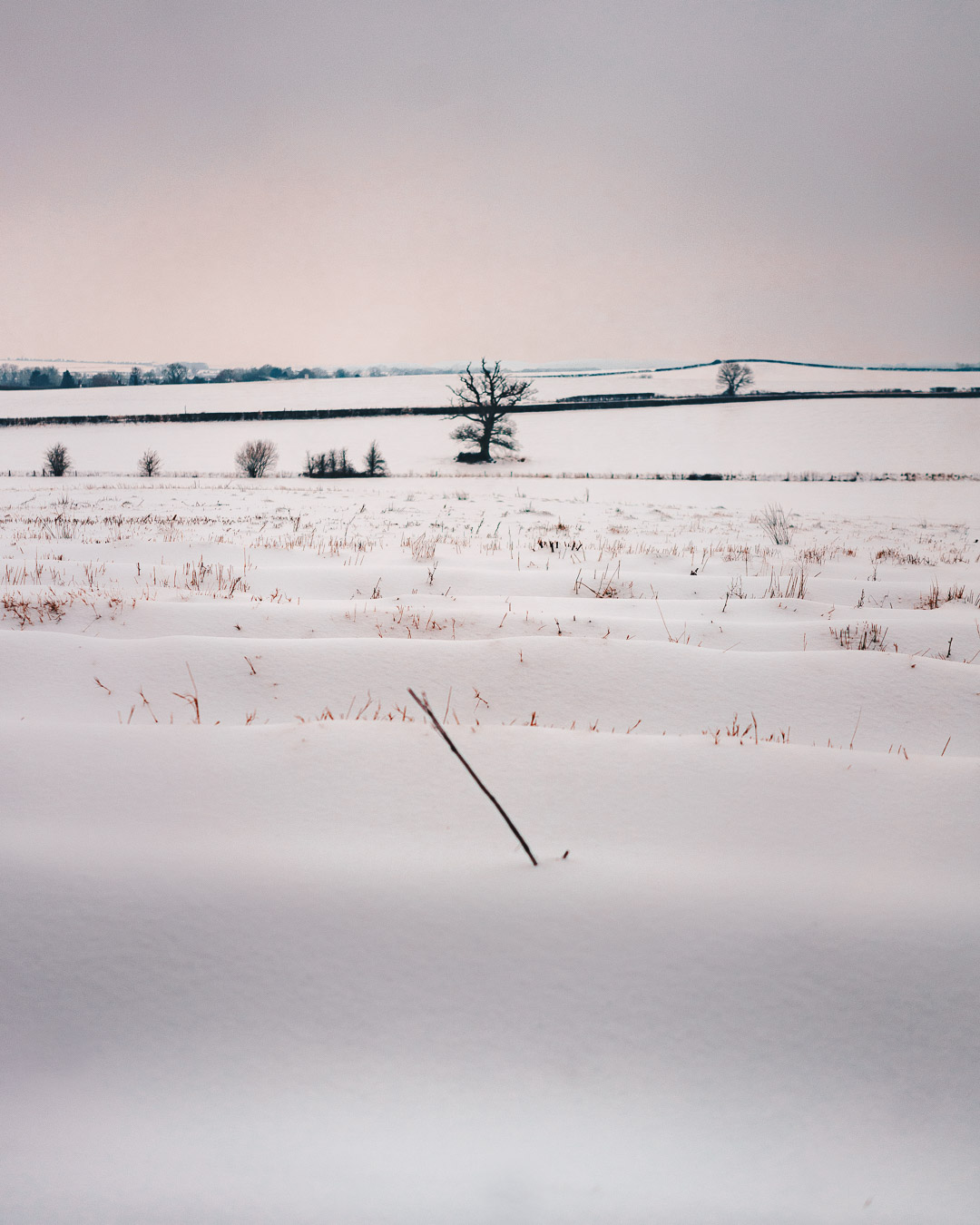
Stick in the Snow / Gaunts Common

Once a Path / Gaunts Common

Ashton Pool in Winter / Gaunts Common

Insectile Tree / Gaunts Common